
The Shrimp Revolution with Daniel Russek, Founder & CEO @ Atarraya
Daniel Russek built Atarraya over 17 years to prove shrimp farming can close its nitrogen loop without poisoning the ocean.
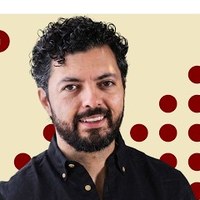
From Hurricane Stan to the Biofloc Bet: How Atarraya's Problem Definition Formed
Daniel Russek did not set out to reform aquaculture. He arrived on Mexico's South Pacific coast in 2005 after Hurricane Stan, working with Afro-Mexican fishing communities through an NGO he founded fresh out of an economics degree. The original mission was economic development, linking university students to underserved coastal communities through microfinance and handcraft businesses. Shrimp farming entered the picture only as Russek began to understand that seafood demand is the fastest-growing protein demand in the world and that ocean supply cannot keep pace.
The defining moment came at a 2009 board meeting. Julia Carabias, the former Mexican Minister for Environmental Protection and the author of Mexico's current ecological management law, asked a single question before the board approved a traditional aquaculture project in Oaxaca: who among the group wanted to be the person who brought one of the most destructive industries to the pristine rainforests of the region? Carabias then laid out the structural damage: conventional shrimp farms discharge urban-level volumes of antibiotics, organic material, and insecticides into coastal waters, and have been responsible for more than 50 percent of global mangrove forest loss. She pointed out that a single mangrove acre is five times more efficient at carbon capture than any inland ecosystem. That meeting ended the NGO chapter and started the technology chapter.
The Multi-Trophic Dead End and the Decision to Go All-In on Shrimp
Russek's first technical direction was a multi-trophic system, which is a production model that stacks three species, pelagic marine fish such as pompano or snapper, tilapia, and shrimp, ordered by their position in the food chain. Atarraya filed its first patent on this architecture. The economics looked strong on paper. In practice, the model required Atarraya to become experts in three separate value chains simultaneously, and each species demands a completely different reproductive environment. Some species breed in summer, some in winter, some cue off lunar cycles, some off ocean salinity. Replicating those cues in a controlled laboratory is expensive and the science is incomplete for many commercially interesting species.
The commercial test broke the tie. Russek discovered that shrimp had an immediate, frictionless local market in a way the fish species did not. "With shrimp, I can literally get just a kilogram of shrimp and just walk here in Condesa, Mexico City and I will sell it. I completely, I guarantee you that I will sell it," Russek said. Atarraya built its first pilot farm in 2010 and made the formal decision to concentrate entirely on shrimp by 2012. A security crisis in the original community, where Russek was threatened with kidnapping as the drug war spread, accelerated the geographic move four hours south to Puerto Escondido and reinforced the strategic narrowing.
The Biofloc System: Closing the Nitrogen Loop Inside the Tank
The central technical problem in any intensive shrimp or fish production system is nitrogen management. Shrimp excrete ammonia continuously. Ammonia accumulates, becomes toxic, and in conventional open-flow farms is managed by flushing the tank with new ocean water. That water exchange is precisely the mechanism that carries antibiotics, organic waste, and insecticides into coastal ecosystems.
With approximately $1 million in combined grant funding and early investment for the pilot farm, Atarraya bet the final $20,000 on a biofloc system. Biofloc closes the loop by cultivating a microbial community ecosystem inside the tank itself. The microbial community consumes ammonia, which eliminates the need for water exchange with the ocean. The first run still produced significant shrimp mortality, but nitrogen levels dropped sharply enough to confirm the mechanism worked. Russek describes that remaining capital as the decision that saved the company: the team went all-in on biofloc for the next commercial farm and has been refining and replicating the architecture in different configurations ever since.
The biofloc approach restructures the cost and environmental profile of the operation at the same time. Because the system does not depend on proximity to a coastline for water exchange, production can be located inland, reducing mangrove exposure and opening new geographies. Because the microbial community replaces chemical water treatment, antibiotic use drops. The system is also designed for replicability at small scale. Russek's early mental model was an aquaculture park: a 350-person community hosting roughly 50 independent farms sharing common infrastructure, each operator running a contained, closed-loop unit.
The "Special Olympics of the Economy" Framing and Why It Drove the Pivot to Commercial Technology
Russek is direct about why he left the NGO model. In Mexico, the nonprofit sector is colloquially called the third sector of the economy, sitting alongside the public and private sectors. Russek describes his discomfort with that positioning plainly. "The third sector of the economy is like the Special Olympics of the economy," he said, adding that the incentive structures rewarded self-promotion over outcomes and that the model did not attract the kind of rigorous problem-solving he wanted to pursue.
This framing matters because it explains the commercial discipline Atarraya applies to an industry where most sustainability interventions arrive as policy mandates or certification schemes. Russek's insistence on building a business that generates its own returns, rather than depending on grant cycles or reputational subsidies, shaped every subsequent product and market decision. The biofloc bet was not a research experiment. It was a business bet with the last available capital.
Aftere 17 years of iteration from that 2009 board meeting, Atarraya's current product, the Shrimpbox, represents the matured version of the closed-loop, replicable unit concept Russek sketched out in the aquaculture park model. The company's trajectory from NGO microfinance to patented biofloc hardware is a case study in how a founder's definition of the problem, shaped by a single well-timed question from Julia Carabias, can hold together a 17-year technical program.
Frameworks from this conversation
- The Biofloc Nitrogen Loop: Replacing Ocean Water Exchange with Microbial Ecosystems
- Multi-Trophic Pruning: Collapsing Three Value Chains Into One to Survive Commercialization
- The Last $20,000 Bet: How Undercapitalized Technical Commitment Defines Company Direction
- Third-Sector Rejection: Using Commercial Incentive Structure as a Sustainability Mechanism
Full transcript Click any timestamp to jump to that moment in the video.
-
Today on the show we have Daniel Russek. He is the founder and CEO of Atarraya. They are a company on a mission to make shrimp farming sustainable. If you're thinking to yourself, cool shrimp, I know shrimp, but do you know shrimp farming? Because I I the way he was talking about it, these different
-
environments they put in, the these different factors that they have to keep track of. It's hard tech, extremely capital intensive. It's amazing the the conversation that we had, the amount that I learned about what really goes into shrimp farming and then the innovations that Atarraya is making in that space.
-
Daniel has been growing the company for about 17 years, so it always excites me to get the perspective from somebody that's been committing that amount of their life to a particular mission. So very inspiring conversation, very cool what Daniel is building. Shoutout to our sponsors, as always CleanTech Growth Lab. If you're looking to grow in CleanTech, they are
-
the people to do it with. And the producers of this podcast, Kraze and Friends. Without them, this would not be possible. Now I give you Daniel. Welcome to another episode of the Grow Show and our sponsors mentioned just before we hit record. Without them, it would not be possible to interview awesome people doing awesome things like
-
Daniel. Welcome. Thank you very much, Blake. What is happening? I there are a lot of people that I'm grateful to talk to. And not a single person has been a shrimp farmer. I have a lot of questions about how you got into it and what that means. For anyone that doesn't know yet,
-
if you could give a brief introduction of yourself and what you're building. Yeah, thank you. Um So my name is Daniel Russek. I'm the founder and CEO of Atarraya. We are basically a biotech company that's working on solving everything that is wrong with shrimp farming and its consumption, right? So I got into
-
this almost 20 years ago when I was fresh out of college. I decided to start I was majoring in economics. I decided to start an NGO to focus on economic development projects, basically linking like universities university kids with uh uh uh mostly fishing communities in the South Pacific coast of Mexico. I arrived there
-
because of a hurricane, Hurricane Stan in 2005. Um and while trying to understand what was the challenge for for for fishing communities for sustenance based fishing communities, so we started doing we started working with women with groups of women doing handcrafts projects. So we we we we designed a brand for handcraft notebooks and like
-
I don't know, like different kinds of decorations for Christmas and we would have like corporate buyers. And but we also did microfinance for fishing communities for for fishing groups to improve their productivity. This is how we started to get to aquaculture because of the understanding of the great opportunity and challenge in seafood. So seafood
-
demand is the fastest growing protein demand in the world and we will not be able to get enough supply from the ocean, so aquaculture was the was the uh the natural answer to that. So that's how I started doing shrimp farming. So this this this started from an NGO that you began?
-
Yeah, I started an NGO fresh out of college, yes. So is this have you always seen yourself as an entrepreneur? Have you always imagined you were going to be a founder or was that NGO the first time you'd ever considered doing something like that? No, I just didn't want to work.
-
Okay. So I I I before the NGO I got into student politics because I come from a from a from a single mom household. My mom was very So she it was very challenging for her to pay for my college tuition and all that and I I started to have some pressure about
-
oh what are you going to do with with this, no? And about just working, you know, mid college. So I decided to get into student politics so that I could instead of getting an income pay my mom with with pride. I was the president of the student council of the university.
-
So awesome. So that I didn't want to work. So the next So when when I was finishing college I was graduating, I decided okay, I this this working towards solving or at least trying to work with communities and and and linking young students with the real problems of deep Mexico and it was also interesting
-
because we were working with Afro-Mexican communities which like very very few people would know at the time. So we also worked with anthropologists and it was it was fun. For me it was it wasn't like a nerdy kind of I didn't I didn't consider myself as an entrepreneur. I just didn't want to
-
work. Got it. So then so then describe to me what that particular moment was where the NGO turned into Atarraya. Um I didn't like the concept of of of the you know, in Mexico we have this I don't know if it's in English the same, but it's like the third sector, right? The third sector of the economy.
-
I don't like it. The public sector, the private sector and the NGO sector. And I felt that it was So for me basically the third sector of the economy is like the Special Olympics of the economy. So I didn't want to I didn't want to be that, right? I was like Oh everybody was
-
like oh you're doing something, but it's it's an NGO and I and I didn't feel that that the incentives were there, that the I felt also like there was a a lot of um kind of people were doing things not for the not for the right reasons, right? So what there was a lot of
-
self-aggrandizing and a lot of I think you know, like scene cleansing or this kind of stuff that I I didn't want to to to to deal with that. And I then I started to think about technology of how to how we can really apply technology to solve real world challenges and it was because of a
-
um the former minister for environmental protection in Mexico. She was part of our board at some point for the NGO. We were about to approve a big aquaculture project for Oaxaca using traditional aquaculture systems and she basically was so her name is Julia Carabias. She literally wrote the current Mexican law for ecological
-
management or whatever. So she she didn't speak the whole the whole board meeting and we were when we were about to approve the project, she said like I just want to ask you one question. Who among these people it's this this is like looks like an amazing project, but who's going to be happy
-
being the that will bring this destructive industry, one of the most destructive industries to the pristine rainforests of Oaxaca? Wow. And everyone like oh, why do you say that, right? And she started talking about the whole reason for why basically shrimp farming is one of the worst things that you can do to the
-
ocean. Uh because every farm just discharges urban level amounts of everything that you can think about. Antibiotics, organic material, even insecticides to the ocean, right? And they these shrimp farms are responsible for over 50% of the mangrove forest that we have lost in the world and a mangrove forest is really important for many many
-
things. Even even in even in terms of carbon capture. Every mangrove forest acre is five x more efficient than any other inland ecosystem in the world at carbon So you are you speaking is there a large mangrove community on the coasts of Mexico specifically or you speaking to Central America as well?
-
uh basically in the tropics where shrimp likes to live, that's their native range, there's a bunch of mangrove forests basically because and they are the intersection between the ocean and lagoons, right? So they are they protect the coastal line, but they also they are like the nursery of the ocean, so they are very important ecosystems.
-
Okay, so so then so then that that board meeting happened and how long ago is this approximately? You said 20 years, is this like 15? This was 2009. 2009, okay. So that so this so this conversation happened and it and it and it pushed you in the direction of trying to come up with a
-
different solution? Yeah, she was actually very nice and she said do you listen to that sound? Yeah, who is that? So, that's that's somebody buying old stuff in Mexico. That's a very I don't know, like classic sound of Mexico City. So, sorry if this gets into our uh No, you can actually this is going to be great to leave in.
-
We get some You get some real flavor of the streets of Mexico City, you know. Yes. Um so, yeah, so so she she basically said like, "Okay, I I I like what you're doing, so I can nudge you in the direction of innovation, right?" And talking to academics and talking to universities.
-
And I really like to I I saw that as an opportunity to basically to to to shed my skin of NGO entrepreneur and then go towards a more like challenging entre technological entrepreneurship. Awesome. Uh uh path of life. And I I really I I took that option and I just run with it. So,
-
let's see. It's 2009 to So, 17 18 years. That's That's a long time to cover to the to the to the the best that you can. Are you able to just to describe how Let me let me preface this with there's a great video online. I don't know who made it, but it has a lot of
-
pictures from when you were still working at the NGO all the way up until your guys' shrimp box. So, I would recommend anybody go watch that video to supplement Daniel's answer to this. But, can you describe how what Atarraya is, how it's changed, what was it when you first started, and any significant milestones to what
-
it is today? Or did you have the vision for the shrimp box from the beginning, you know? No, no, no, no, no. No, but but there was a little bit of a of the concept. I mean, basically what we wanted to find was a very a very efficient system, aquaculture production system, that would be
-
replicable, that would be that would make sense at a very small scale, right? And then you would just add more stuff to it, right? More You would just replicate it. At that point we had this idea of aquaculture parks, like an industrial park in which would we would have like basically like people from a
-
community, let's say a 350 people community, and that I don't know, we could have like 50 independent farms, but they would share the same infrastructure, right? So, basically that was different goods, different animals they'd be producing or the same?
-
Uh so, that was one of the So, our first patent was for a system that would have three different species. A marine marine fish, pelagic fish like I don't know, like pompano or snapper, snook, then tilapia, and then shrimp. So, they would be So, this is called a multi-tropic system. They would be basically ordered
-
according to the role in the in the in the in the food chain, right? That was nice. The the the the economics were very good, but the problem is that then we would need to be experts in three different value chains. I see. So, three different And the problem is that each species is completely has a
-
completely different For instance, the most difficult part is the reproduction aspect, right? Every Every fish has their own thing for how they they they they they they get I don't know, interested in it breeding, right? For instance, there were some that that that that breed during the summer, there are some that breed during
-
during the winter, there there's some that get the cues from the from the moon, there are some that get their cues from the from the from the from the salinity of the ocean. So, you basically need to replicate all that in a laboratory that is very expensive and it's and it's it's not always understand
-
there's not enough understanding for every species that you would like, right? So, we picked shrimp because it was the easiest I mean, when we had harvest from the rest of the of the of the of the fish, it was a little bit challenging to sell it. With shrimp, I can literally get just a kilogram of shrimp and just
-
walk here in Condesa, Mexico City and and I will sell it. I completely I guarantee you that I will sell it. So, so then 2009 this this idea started about when roughly did you decide to focus on shrimp? 2012. 2012, so it's 3 years of exploring this idea, doing research into it and stuff, and then you
-
guys Yeah, we we we built our first pilot farm in 2010, and by 2012 we decided to go all in into shrimp. Wow. Okay, so something that I've something I'd like to focus on at just at this point in the story is that I think it's a very significant thing when companies decide to pivot in
-
this way. And and the fact that you built out an entire farm, had tested it, and then and then decided to pivot, I think is is an amazing decision. How was it for you personally to navigate that? Well, at that time there was the Do you know the war on drugs started in Mexico? And the
-
the municipality that we were the community that we were working in which used to be one of the most peaceful communities in Mexico, just started to get I mean, we say it would like really hot, right? So, there was actually I was threatened to be kidnapped. So, that was That kind of made the decision of of of leaving
-
that farm Wow. easier. So, we moved like 4 hours south to Puerto Escondido. It's a beach town, surfing community. It's a beautiful It's a beautiful place. Please, people, don't go there. Stay away. Yeah. Just look at pictures. But yeah, so we we decided to build our first commercial farm there. And it was for many reasons it was
-
advantageous. The security-wise first, then it was also like a more accessible place, more touristic place, so we were able to have talent to bring talent from all over the world there. Interesting, okay. Okay, so then so then this puts us at 2012 and you're focused on shrimp. What was your first So, was it was it just
-
was the idea to build out a shrimp farm or was it with the intention of developing a specific technology that would evolve the industry as a whole? Yeah, so both. So, basically we decided to bet on I mean, we had a grant between a grant and an investment, a grant from the government and investment. It was
-
probably $1 million to for the pilot farm. The last $20,000 we decided to bet on one very specific system, which is called biofloc. The problem with fish is that and shrimp is that you need to manage the nitrogen levels, right? So, they when they exhale, they like pee at the same time, right? It's So, they they basically
-
excrete ammonia. This builds up and then it becomes toxic. It's the reason why your fish tank in your house gets clean. It's because it's a fertilizer for algae that's everywhere. So, when you're when you're dealing with with aquaculture, you have to deal with that somehow, and you can either by dissolving it, by basically by bringing
-
new water, right? And through So, just just you do you do you do just the water exchange. And we we had a huge mortalities for that with our first system, right? So, we decided to bet on this biofloc system, which is basically it closes the loop by creating a microbial community ecosystem inside
-
the tank. So, then you don't need to do water exchange with the ocean, you just keep the same water, and you let this new ecosystem to filter it. So, that final like I don't know, last 10 or 20,000 dollars was basically what saved the company.
-
Because we were able I mean, we we had actually a huge mortality on shrimp, but the nitrogen's levels dropped significantly. So, our next farm, our next commercial farm, we decided to bet 100% of the company on that, and that's basically what has what what we have been replicating in different kinds of ways since since 2012.
-
So, so that so that initial First of all, congrats. I'm glad that the bet it worked out. Um when when you when you decided to to invest that money, and how did how did it like I've no idea about the economics of shrimp farm. I don't know, you know, like the time to
-
harvest and then the time to make return on your investment, but what was that period like? Did you, you know, spend that money, invest in that in that farming approach, and then was able to go sell, and then, you know, create cash flow and fund the business that way, or did you have to go out and fundraise
-
additionally? No, no, we we have had to fundraise. So, for the last um 17 years, like most of my time has been doing fundraising. And we are about to uh uh to basically to graduate from that process, right? But just now.
-
I like if you consider the people that have tried to do this. So, I will I will I will I will I will fast forward a bunch of years here. Because so, after going to this commercial-size farm, and you can see it's our farm in Oaxaca. So, we got there to about a productivity of about
-
60 60 to 80 tons per hectare, right? The traditional systems yield 1.4 to around 5 tons per per per per hectare. That's the the basic traditional systems, right? So, then in 2019, we started selling our shrimp in the United States. So, now our shrimp is fresh, never frozen, no antibiotics, no chemicals, no preservatives. So, we
-
looked with that there is was this amazing demand for this high quality and clean product. So, we decided and and we also had this I mean, our our idea was to develop this technology and then to share it. So, our farm was basically like a lab like a laboratory.
-
Okay. All right. And then the idea was to transfer it. So, we tried to sell this technology or to partner this technology with people in Ecuador, in Mexico, in Guatemala, in the Philippines. I really traveled all over the world trying to convince that higher yields and a and a cleaner product and a more sustainable
-
product was was was the future and farmers would say like, "Yeah, but you're not making money. We are making money, so shut up." So, and that's understandable. So, we decided in 2019 to start developing a new idea, which is the shrimp box, so that we because we we we we we realized that we could leapfrog the whole
-
industry. So, shrimp farming is based on trade, right? So, 90 95% of the shrimp that is consumed in the United States comes from abroad. So, we can change and the and the reason is because you would need to have a warm ocean next to our farm next to your farm that you can
-
basically dump anything that you want into that. So, that's really not legal in the United States. So, you cannot have scaled shrimp farming in the United States. But with our technology, we could leapfrog the whole industry. So, we realized that that that was the best use of our the the best leverage for our
-
technology and that the the the the the market then becomes massive, right? Because instead of of of farms, big farms, very inefficient with really no rule of law in places like Mexico or Ecuador, then we can do farming just next to next to Manhattan, right? Like like our New Jersey farm.
-
Um So, we decided we decided to to to bet on that. And then so then the question the first question was how do we develop the technology, then how we develop the production system, I mean, the hardware and the software and the standard the standard operating procedures around it, and also how do
-
you how do you improve the productivity? So, for instance, in in Oaxaca, we got to 80 tons per hectare. Then in our farm in 2022 in in Indianapolis, we reached something like 120 tons per hectare. We needed that number to be 160 tons per hectare. So, we reached that late 2024 and then in 2025, we reached 240 tons
-
per hectare. At that point, then we can make urban shrimp farming anywhere in the world profitable. How did you how did you Okay. Wow. So, how did So, okay, my first question, what was it that continued to change, continue to evolve to get you to that 200 uh ton per hectare? It's a thousand
-
like really small details. So, we have over a thousand units of replication, right? Over a thousand populations that we can drive data from. I think that the most important aspect of this is the nitrogen cycle. I mean, you first I mean, the the shrimp basically eat protein in the form of feed, right? So, they feed they excrete
-
ammonia. That's the result of the metabolization of the protein. Then the ammonia starts to build up. So, then we have specific type of bacteria that eat basically these feed on these ammonia and then they create they they they breathe, they reproduce, and then they leave nitrite, which is a second species of nitrogen. And then
-
another set of bacteria comes and eat that nitrite and they leave nitrate. You can have 300 times more nitrate per mole of nitrogen than before it gets toxic, right? So, crossing like every every every every time we cross that step, there's there was new challenges, new challenges, new challenges. So, so what what sounds like
-
to to to me is that there are a bunch of small failures. Like you're saying that that that that you guys were able to iterate and learn from. Is that the word that you would use? I agree. So, were there any of these failures then again, a very fascinating thing to me is especially
-
about a company that's been around as long as you guys have, which is extremely impressive and awesome. Are there any failures that you felt like were big enough to derail a company at any point? Yeah, but it's it's not about biology.
-
Like really what what what has sometimes derailed the company, it's basically human expectations. So, and it makes sense. It's basically from investors, right? Because the problem is that the the the the the um the structure, the template that people use to think about a company like ours is a technology company. So, these
-
But the problem is with biology, like for instance, it's 4 months for a whole population of shrimp to mature, right? And they grow 10,000 times their size in that time, but it's it's it's slow, right? So, we are we are we are learning at the pace of biology. So, now I think that every I'm I am I'm
-
happy after every cycle, I'm happy that we learned something. All right. So, we we have a very disciplined way to to look at data and to structure in a way that we that we know what what questions this open, right? And we are right now we have very few questions. We have basically solved all the questions that
-
we that we needed to solve at different levels. But yeah, the crises are more ape boring than shrimp than crustacean boring. Okay. Are are our um Tell me about when you first came up with this and decided on the shrimp box and decided to commercialize. Tell me about the first pilot partnership. How
-
did you acquire that and how did it go? How did you get you know, successful one? So, the the first So, the shrimp box idea was I was having a conversation literally with a with a um with a physicist from Harvard at the Boston Seafood Show.
-
This was very interesting guy. He wanted live shrimp. He's Chinese ancestry, right? And he said like and I said like, "I I want live shrimp." He said like, "You cannot." "Why?" "Because it doesn't make sense. Like everybody that has tried it to farm shrimp in the US has failed and they have spent 70 to 400 million dollars
-
trying to do it. I won't do that." "Why? What have they failed?" "Oh, because it's I don't know. The energy density is blah blah blah." And and this guy is a physicist. Like, "Shut up. I know more about energy density than you do." Um so, we decided to So, he invited he invited me for dinner
-
with my girlfriend at his house and she she she cooked amazing amazing shrimp and we had this amazing conversation uh with organic wine and shrimp and really nice coffee about what a system that would be what would be the characteristics of a of a system in the uh to work in the United States, right? So,
-
that was interesting and yeah, that's how we came we we we we came to the idea of a of a hyper modular system. The first one with the shipping container. We have discontinued the shipping container concept because it just got too expensive.
-
And the first farm we So, the first and the second farms in the United States, we we financed it. We financed them. These pilot these these first two pilots in the United States, it was basically self-funding. We we stuck with it to do that. Okay. And and and then and then I I think that's an awesome story with
-
how the concept came to be with the physicist and then working through the things that didn't work. What are additional things that people have When you when you've approached potential partners, potential customers that would buy the shrimp or So, actually to a question before then.
-
So, is is the idea now are you are you guys selling the shrimp from from these farms or is the idea still to to create a a reproducible technology or approach to shrimp farming that that you can spread?
-
Yeah, the second. I mean, we are very good at selling shrimp. We can we can get like for instance, last year we sold like our record number of shrimp at a very good price basically working with uh food service like key accounts and also Chinese live shrimp buyers in Manhattan.
-
But now the basically everything that we have done is to prove that we you can build a business based on this technology and now we're entering this phase in which we are building relationships with a master franchise kind of structure, right?
-
Okay. Awesome. So, so thank you for thank you for answering that cuz my my follow-up question is when you're going and we could approach any stage of this company with this question, which I think is amazing and would love to do, you know, in the next episode.
-
At least at this point right now with where you're at, how are you approaching building these relationships? How are you approaching going to market with this with this concept that you now have? We've been we've been in conversations with several groups international groups over the past 3 years and we just we are about to
-
announce a farm in Abu Dhabi with one of their sovereign wealth funds and a and a company which which mission is to is basically food security for the So, these guys are amazing partners. The UAE is was the first country in the world to have a minister for food security, right? So, we're working
-
with them. They They're They're really capable player. We're setting up a pilot farm that's going to break ground in the summer of this year. We'll have our first harvest before the end of the year. If that's successful, then we'll go into a massive production that will target 5% of the of the UAE's demand.
-
Hey, congrats. That's awesome. So, how do you how do you get how do you find these people? How do you get in touch with them in the first place? Are these conferences? Are these cold emails? No, actually our videos walking around in the Our LinkedIn videos uh they they appear to be very
-
effective. Actually, I got the I got these these from this fund. I we published a video that features Bruce Lee. At the beginning of the video. Uh and then next day I had these. So, every time we we we throw these crazy videos, we start to get some inbound. So, that has been very interesting. We're also in
-
conversations with a with a with a tomato producer in in the UK and then another potential partnership in Spain. So, and some others in in Canada. Yeah. So, these are these these are these are all interests from you guys making creative organic type of content and putting it out on your social media channels and
-
then getting inbound interest from that? Yes. Wow. It's remarkable. It's been remarkably effective. Awesome. That that's that's really cool to hear cuz all the time and and a big part of this show is to understand how once people establish breakthroughs like you have and understand that they have a real product that works and that that that
-
solves a real issue. How do you bring that into the world? Like how do you get how do you get in touch with and establish conversation with the people that are ultimately going to benefit from your technology. So, to know that that you guys have produced content and it's and it's funny and interesting and
-
personal to you and that has received a lot of inbound contact. Are there are there is there any um feedback that you've gotten that has been what are people's misconceptions around this type of technology around shrimp farming that people have?
-
Well, probably the most important one is that is is shrimp um swimming in their right? That's probably one of the of the of the of the most obvious one. And and and I can see where that comes from.
-
But basically the the like if you would wait the amount of excretions that the shrimp every day that they have, it's it's it's it's it's really tiny, right? This is basically like everything we do it's an excre everything we we we breathe or we drink or whatever has some kind of excretion from some
-
like for instance the oxygen. Right. comes from the from comes from the trees, right? So, this this creating an ecosystem that is in balance um it's it's looking at that it's it's looking with biology and not against biology, right? If you go to our farms, there is no smell. There is no like we
-
can actually so we have now I think that the most important thing right the most interesting scientifically interesting thing that we're doing we're working with tomato producers, right? So, if you have a hectare of tomato, your best year will deliver you something like $150,000.
-
If you put shrimp there and you will have already infrastructure, you can get something like $500,000 per hectare. But not only that, you can get the biofloc from the from the shrimp and you you can apply it to the to the to the tomato and you will get better results than with an inorganic
-
fertilizer. So, is that is that the vision then? Is that the direction that that you're going? Yes. So, we are most of our of our partnerships that we are dealing with right now have an interest have significant assets in tomato production, right? And then so that the shrimp can basically create this synergetic
-
relationship with with tomato through microbial communities and create organic regenerative tomato and organic and clean shrimp. I think it's it's it's it's it's it's it's it's a great thing. Are there areas where this type of farming is is is happening right now? Cuz to me, right?
-
This this seems sensible. It seems like it makes sense. It's it's it's it's circular. You know, it's it's it's regenerative. Are are there other industries that are doing this already? Well, if you think about the old ways of doing stuff, yes. Like right? You would have your goats, you would have your cattle pasturing
-
right? So, um grazing around your whatever that crop that you're producing and you would use that as fertilizer. This is a bit a little bit like next level to that because what we are transplanting it's not it's not it's not really like it's not the fertilizer.
-
It's a functioning microbial community that is working in the soil. We're just it's basically like a transplant from the water to the soil and they are just working, right? Okay. So, I have I've I've uh I I don't know a lot about this type of farming and this type of circular setups that you guys are doing.
-
We're coming up on time, so I think I'm going to I'm going to have to save type out, you know, an essay over an email or something like that. So, with this future articulated, you know, we talked a lot about the history, how you got to this point, the shrimp box concept, how many times you pivoted,
-
all these things with the direction that you're going, the traction that you've established. What is the biggest hurdle that you're experiencing right now and how is it also an opportunity? Yeah, so I think that the biggest hurdle that we have uh encountered has been funding.
-
In 2021, it was kind of easy to get some kind of funding. Right now, it's very difficult and for like a capex heavy industry like farming is, that was the that was the biggest hurdle. That's why we're pivoting right now into master franchise kind of business model. It's it's it's it's low capex. It's it's it's
-
asset light structure. We have also been um we have leveraged a lot of AI for most of our non-biological and non-essential activities, right? So, we we were very early adopters in in in in AI. So, now our cost of our our our opex is very low and we we don't need to invest further
-
in capex. So, that has been basically the these challenge for getting funding and switching to an asset light business model. I think that's Is that kind of the answer? Yeah. Yeah, that's that's that's a hell of an opportunity. I mean, that's crazy, you know, like the that is that is an amazing way to respond to to a challenge
-
such as that and it's and it's really cool to see that you guys are navigating that. So, my last question for you with the direction that you just established and the partnerships, what inspires you to keep to keep going?
-
It's a great adventure, really. It fulfills me in so many ways. I meet amazing people all the time. I get to know amazing places that I didn't know that I would ever I I didn't think that I would ever have a shrimp farm in Abu Dhabi. When I started my NGO, I I never expected
-
to be to be to be doing this. So, basically that that's that call for adventure is really what excites me. Incredible. Well, I did I did get to meet some of your team as well in New York when you guys were there last and it seems like it's it's really great chemistry that you all have and that
-
you're building something cool. So, muchas gracias por tu tiempo hoy. I'm excited to keep in touch. I'm excited for where you're going. If anyone else was inspired to connect or follow along with the best way to do that.
-
Um probably LinkedIn. LinkedIn LinkedIn is probably the best one. Good. In the sec. That's right. Hit him up. They're doing awesome things. Daniel, thank you so much for the time today. Look forward to staying in touch. Thank you very much, Blake.


