
This Algae Tech Could Replace Wastewater Treatment | Martin Gross, CEO @ GWT
Martin Gross turned a lost oil-industry job in 2016 into GWT, which now uses algae to replace chemicals and bacteria in wastewater treatment.
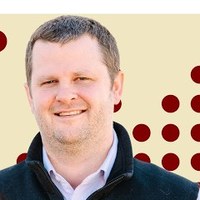
From Biofuels Dead End to Wastewater Beachhead
GWT did not start as a wastewater company. Martin Gross and his university collaborators developed their algae-growing system during the early 2010s algae-to-biofuels boom. When the economics of biofuels proved unworkable at scale, the system itself remained sound. The pivot came from an outside signal rather than an internal strategy session. Representatives from MWRD Chicago, the water reclamation district serving the greater Chicagoland area and one of the largest treatment districts in the world, attended an algae biomass summit and sought out the GWT team. They needed a system capable of recovering phosphorus to meet a new discharge permit.
"They actually came to us and were like, 'We want to pilot your system at our billion-gallon-per-day wastewater plant,'" Gross said. "And they like, it just fell into our lap. That's how we got started in wastewater. They pulled us in."
The lesson Gross draws is not that founders should wait for customers to find them. The deeper point is that a validated core technology, one that demonstrably grows algae well, can be redirected toward whatever application provides competitive advantage. The technology preceded the market thesis.
What the Chicago Pilot Actually Proved (and What It Did Not)
The MWRD Chicago engagement confirmed that the GWT system could remove nitrogen and phosphorus from wastewater at meaningful scale. What it did not answer was which market segment would be the right commercial home. A billion-gallon-per-day facility operates under economic and regulatory conditions that differ sharply from a small rural community.
Gross frames this as a two-stage learning process. Stage one is proving the technology works on real wastewater. Stage two, which occupied a significant portion of GWT's 2017 work, is mapping competitive fit. The question he kept returning to was: where is this technology cheaper or more capable than the alternatives already in place?
The answer pointed toward small Midwest communities using controlled-discharge or continuous-discharge aerated lagoons. These lagoons are a simple, low-cost treatment method common across rural America, and GWT's system could be retrofitted onto them without replacing the entire infrastructure. Gross describes this as identifying the beachhead: "We really leaned into that to be our beachhead market. Let's collect a lot of data there so we can go and sell our first facility."
The Chicago engagement functioned as proof-of-concept. The aerated lagoon segment functioned as the repeatable commercial entry point.
The SBIR-to-Accelerator Funding Stack
GWT's early capital architecture followed a specific sequence that Gross treats as a model worth teaching. The company launched in December 2016 when Gross finished his PhD, incorporated immediately to satisfy SBIR requirements, and began drawing on a USDA Small Business Innovation Research grant that arrived the day after a private-sector oil-industry job disappeared. The grant created the company's first runway without diluting equity.
From there, Gross joined the Iowa State Startup Factory accelerator in early 2017. The accelerator served two functions. First, it introduced Gross, a trained engineer and scientist, to the operational vocabulary of early-stage companies, balance sheets, investor communication, and business model construction. Second, it produced GWT's first angel investor through direct network access.
By the time GWT had its first paying customers, the company had layered three capital sources: federal non-dilutive grant funding, angel seed investment sourced through the accelerator, and revenue from pilot installations. Gross does not present this as a formula, but the sequence reflects a risk-management logic. Each stage reduced technical and market uncertainty before the next source of capital was introduced.
The Technical-Founder Communication Problem
Gross teaches an entrepreneurship seminar at Iowa State for PhD and master's students in science and engineering. The class exists because, as he observes, many technically trained people at Midwestern universities have a narrow career map: become a professor, join a large company's research division, or stay in academia. Founding a company rarely appears on that map.
When Gross assesses why some technical founders succeed and others stall, he returns to two variables. The first is communication. "Effective communication, effective storytelling. I feel like that's one thing that is really important for a successful early-stage CEO. There's a lot of networking. You have to get your story out there. You have to convince people, whether it's your customers or partners or investors, that this is worth them spending time on."
The second variable is risk tolerance. Gross is direct that this is not a universal fit: some people need income stability, particularly those with young families, and forcing a founder path on someone with a low risk threshold produces bad outcomes. His framing for students is blunt: "You're a broke college kid right now. Be broke for a little bit longer and start a company."
The practical implication for climate-tech founders is that communication skill is teachable and should be treated as a technical competency, not a personality trait. Gross learned it while running a company; his students can learn it before they start one.
The Algae Biomass Value Chain as a Cost-Structure Argument
GWT's core competitive claim rests on two cost-structure differences relative to conventional bacterial or chemical wastewater treatment. First, algae-based treatment consumes less energy than bacterial-based treatment, which depends on aeration equipment running continuously. Second, the output of GWT's process is algae biomass rather than chemical or bacterial sludge. Conventional sludge is a disposal liability. Algae biomass is a potential revenue source, with downstream applications in fertilizer, soil amendments, biofuels, and sustainable aviation fuel.
Gross is careful not to overstate the biofuel economics, given that the original algae-to-biofuels thesis proved premature. The biomass value chain is a supporting argument for the overall cost position, not the primary business model. The primary model is selling a wastewater treatment system that costs less to operate than the incumbent. The biomass optionality improves the economics without depending on commodity fuel prices to validate the core sale.
Frameworks from this conversation
- The Technology-First, Market-Second Sequencing Model
- SBIR-to-Accelerator Capital Stacking
- Beachhead Selection by Competitive Fit
- Communication as a Technical Competency for Founders
Full transcript Click any timestamp to jump to that moment in the video.
-
Today on the show, we have Martin Gross. Martin is the co-founder and CEO of a company called GWT. What they do is push into the world a proprietary technology that uses algae to remove foulants from water. Primarily, they use this technology in wastewater treatment facility applications, but they also experimenting with industrial facilities.
-
But not only is Martin the leader, co-founder, CEO of this company, he's a part-time professor. So, the whole ethos of this podcast is to put forward go-to-market frameworks for how to grow your climate tech company. And he does that part-time for a living. So, it's very enjoyable for me to ask these questions and get a lot of um
-
almost almost prepared answers about different things that are important to the the students that he that he teaches. So, very informative, excited for you to learn from Martin on his journey. It's been 10 years, so congratulate congratulations to them.
-
Thanks as always to our sponsors, Cleantech Group Lab. If you're looking to growing cleantech, they're the people to do it with. So, if you take these frameworks from Martin and you give it to Cleantech Group Lab, you have a pretty good formula there. And the the producers of this podcast, Kraze and Friends. And with that, I give you
-
Martin. Hello, welcome to another episode of The Grow Show. To our sponsors, Cleantech Group Lab, Kraze and Friends. Without them, it would not be possible to interview awesome people doing awesome things like Martin. Welcome. Yeah, thanks for having me, Blake. Great to be here.
-
Absolutely, today we're talking about not only Martin, but algae. And algae and water and algae and water and waste water. It's got so so many cool things happening at the same time. So, for anyone that doesn't know yet, if you give a brief introduction of yourself and what you're building.
-
Yeah, uh Martin Gross I'm the CEO of GWT. We're uh an algae-based wastewater treatment technology company. That means that we are using algae instead of bacteria and chemicals to recover nitrogen and phosphorus from wastewater. Algae is is is great from a sustainability perspective um for a number of reasons. One is we use less
-
energy than bacterial-based treatment. And two, because we produce algae biomass during the treatment process instead of chemical or bacterial sludge that's a cost to dispose of. Uh we produce algae biomass that can be used to make really cool products like fertilizer, soil amendments, and even biofuels, and sustainable aviation fuel.
-
So, before we get into the trillion questions I have about all of what you said cuz it's um it's it's a I think it's a very delicate business model to be able to execute on, especially where you're um you're doing it in. But, did you ever envision yourself uh we were just talking about you getting uh your
-
PhD out there. Did you ever envision yourself being a founder or did something happen at some point? Yeah. So, when you say when you say this is the plan, um wasn't I was in grad school getting my PhD my goal was to finish my university and um I actually had a really nice job
-
lined up up until about 4 months before my uh I was graduating. I had a a job lined up and and actually was in the oil industry and I was going to have this great high-paying job, you know, corporate job. It was going to be great.
-
And at that time the industry kind of turned and all of a sudden my job was gone. Oh, no way. So, I'm like, okay. I remember going talking to my wife in her office and I'm like, hey, you know, we were going to move to North Carolina. I was in Iowa.
-
And I was like, yeah, you know how we were going to move there in a couple months? That's that's not happening anymore. And yeah, anyway, long story short, a day after after I I told her that the job was gone, we won this grant. My the professor I was working for and I won this grant
-
from USDA called a small business innovation research grant. And we're like, okay, I guess now Martin's job is now going to be doing the research on this grant. Wow. And we kind of took that that grant and the momentum through the SBIR program, if you've heard of that, and started GWT and that's that's how we
-
got started. It's It's Martin lost a job and then uh Yeah, [clears throat] fortunately we had some money and I did the research for a few months and spun out GWT at that point. So, you had you had already applied for that grant knowing that you were going to leave. So, the idea was
-
that you'd receive the grant and then hire someone else once you left. You know, I don't know if it was really thought through that much. You know, it was it was uh You know, we thought we had a really cool technology and we wanted something to happen to it and we had some time
-
available and the right grant was out there. So, we're like, let's just apply to it. And if we win it, we'll deal with it then. You know, it wasn't like someone else was going to do it. It's like, we'll just figure it out. And yeah, luckily we won it. And literally a day after the job went away,
-
That's wild, man. our own job. So, yeah. That's how I got into it. Yeah, so then so what was the first And how long has it been since then? Yeah, so that's 2016. 2016 2016, yeah. Yeah. I don't know if the 10 years has come up yet. I don't know when in the year it
-
happened, but this is the this is the decade, Martin. Congrats, man. Yeah, December. So, I maybe we need to have a 10-year party. [laughter] Well, when So, so then if it's been 10 years, um did you like take me through the the business steps cuz you said that's when the the business started. Was it
-
incorporated then or was there a couple years or months of additional research that needed to be done? Like what happened after that? Yeah, so yeah, I will just zoom into that point. So, uh graduated my PhD in December 2016, um and the grant started in January. So, really no gap there.
-
Um but what I did was like, "Okay, this is a small business innovation research grant. We actually need an operating company." So, we created that. Um so, it's actually incorporated then. Um and the first thing that I did was I got involved in an uh an accelerator. So, Iowa State has a something called the Startup Factory,
-
which is the goal is to spin off companies from the university and get, you know, technical founders like me, which is, you know, I'm an engineer scientist by training, um kind of a an introduction on what it's like to start your business. So, I started that accelerator in, you know, early 2017 and met our first investor, you know,
-
through that accelerator. So, now we had a grant, we had some angel seed investments, and uh you know, from there we just continued to mature things along, but um I had to really learn what it actually meant to be an entrepreneur like while I was doing it. And and maybe I'm sure, you know, some entrepreneurs
-
are like, "This is what I'm going to do. I'm going to train myself through my college degree to be a, you know, all these things." But I did learn a lot of that on the fly. So, then so then I I got I got two branches and the first one is for you
-
personally, what was it what was it like um going from completely research-based engineer to learning this entrepreneurial track because a lot of the lot of the listener base, a lot of the people that The Grove hopes to serve are people exactly like yourself that have that come up with this incredible innovation and now need to make the
-
bridge which is a great you know crazy 10-year bridge between you know having something viable in the lab to then you know application in the real world. So what was that experience for you personally? Yeah. Well, so my dad was an entrepreneur. I mean he he he ran a small general construction company. So like
-
running a business wasn't completely foreign to me. I wasn't scared of the risk in doing it. Like I know that it's it's certainly a lifestyle that you know is scary to to some folks. But I really think that you know technical folks like me that has a you know a high-level technical degree can
-
largely learn how to become an entrepreneur. Maybe you don't have the right mindset. Maybe you don't like the risk profile of starting a company and that's fine because it's not for everyone. But overall like if you can you know do differential equations, you can figure out what a balance sheet is, right? Like
-
I think that the you know and then it and then it's just a matter of are you good at it or not and you know can you can you you know tell a tell a good story? Can you network? Can you communicate effectively? Like those are the things that may be more challenging for a
-
technical founder. But I think at the end of the day like most people can learn those. I'll also say that you know like one of the fun things that I do in my in my life today is I I teach a class. I actually teach a an entrepreneurship class at Iowa State. I still live quite
-
near to the campus. So I teach PhD and masters students in science and engineering like what it's like to be an entrepreneur. It's not it's like a seminar class and it's really just you know to teach these students that are so technical in their training and often times, you know, unless you're like MIT or
-
Stanford, like where entrepreneurship's why you're there maybe, a lot of like the technical folks at the Midwestern universities think like, "I'm going to go get a PhD. I'm going to become a professor. I'm going to go work for a large company do research." And and entrepreneurship's like not a career choice that they really think about and
-
they're not educated on. So, uh the class I teach is like, "Hey, here's a third career option for you. Um you're a broke college kid right now. Be broke for a little bit longer and start a company." And so, [laughter] that's kind of telling my story. So, Oh, that's so cool, Martin. So, then I guess
-
just an additional uh question on this branch is is there anything common, again, from your own personal experience, but I guess from teaching this class for uh a few years, is there any is there anything common that that typically is uh a breakthrough point for someone technical to transition from just technical engineer to technical founder,
-
or is it really just the basics of entrepreneurship? Yeah, I I would say communication is a key skill that an entrepreneur needs to have, effective communication, effective storytelling. Um and I feel like some technical extremely technical folks prefer to I don't know, sit on their computer and do their work and not, you know, talk to
-
people every day and communicate. And I feel like that's one thing that is is really important for a successful, you know, early-stage CEO is there's a lot of networking, there's a lot of you have to get your story out there. You have to convince people, whether it's your customers or partners or investors that
-
like this is worth them spending time on and that takes effective communication and storytelling. The other thing I'd say is is just managing a risk profile. Like some people don't like to take risks. Um they like to have a steady income stream. Maybe they need a steady income stream for you know a young family or
-
something like that. Um so I think risk is the other thing is if if you can manage the risk of the highs and lows of being an entrepreneur, the uncertainty of becoming an entrepreneur like those I think those two things you know are are probably the the key factors I think of uh someone that maybe would be well
-
suited to do this or not. I'm tempted just to make this a recorded version of your seminar. I had so I have a lot more questions for you but I but I but I do want to learn about um uh your path to commercialization because like I said, I what I understand of the
-
business model is very delicate. Uh it's it's uh not easy to execute especially in the market that you're doing it in. So going back to the beginning how how long was it until uh like a first pilot or even when that was? Did you have to establish some level of viability? Did you guys apply for a
-
patent? Like you know what were the first couple years like? Yeah. Um well I'd say we did we applied and were awarded a patent pretty early on. Uh well we applied uh the the patent actually issued later on but um our story's kind of unique in that sense for like our first paid pilot customer.
-
So it actually happened when I was still at the university. So we invented this algae technology not to be a wastewater treatment technology. This is early you know 2010s. There was a lot of interest in algae to biofuels.
-
If you remember, I'm sure some of the audience remembers this boom. Um so that's we were we developed the technology as algae to biofuels. But what we learned pretty quickly is you can't make money on algae to biofuels unless the economics shift rap great greatly. So about the time we were figuring this out, we still believe we
-
had a really good algae growing system. We actually had some folks from MWRD Chicago. So this is the water treatment district in the greater Chicagoland area. Um they had gotten a new phosphorus permit and they were interested in algae to recover phosphorus to meet their new phosphorus permit. So they actually went to uh you
-
one of these uh there's something called an algae biomass summit um where a bunch of algae geeks get together. This This does exist. Like 400 at that time got together. They actually attended and they're like, "Hey, um we're looking for an algae system that we think could treat water wastewater really well." And
-
they really liked our system. And so they actually came to us and were like, "We want to pilot your system at our, you know, this billion gallon per day wastewater plant, which is like in the water industry, this is like most people's like the holy grail of like we want to pilot with MWRD Chicago. And
-
they like it just fell into our lap." And that's how we got started in wastewaters. They pulled us in. So that was so that was from the beginning like, you know, going back to you lost your job, now you started a job, and part of your job was not only learning how to be learning how to
-
entrepreneur in the in the program, but also like let's service this this pilot that we have. Yeah. Yeah. I mean So so actually so So we actually had money for showing pilot in the effort at the university before we started GWT. So once we started GWT, we actually got a few additional pilots out in place. So
-
yeah, it was actually part of the grant where we were able to fund one of our pilots to be installed on site. Interesting. Okay. So then so then take me through then how did we get from pilot to first paying customer?
-
Was it clear after the engagement of Chicago and also you know how long was that engagement as well but was it clear after that that this is the market that you want to go into or there other things that you guys were looking at?
-
What was clear with working with Chicago was our [snorts] system was really good at removing nitrogen and phosphorus but what was not clear at the time yet was what market is best for our technology. You could think of city Chicago is the largest treatment district in the world. Like they have certain technologies that are
-
economical for them that they use versus small communities that use a different type of treatment process. So I think what Chicago taught us was okay we can treat the water. The next step early in the business and this is like 2017 time frame is what's the market that we fit the best. Where are we competitive
-
against alternative? Where is there a need for a technology like ours? So what we found was that small communities in the Midwest United States have a lot of controlled discharge or continuous discharge aerated lagoons. Which is just like a simple way to treat water at small communities and we could retrofit those. So we we we
-
really leaned into that to be our beachhead market that okay let's collect a lot of data there so we can go and sell our first facility. I'm telling you we we did years of piloting in that in that waste water to collect the data that we needed to get through regulatory approval process because you know it's
-
not just as simple as like we come up with a pilot it works. And now you can go sell commercial system. It's like you need to convince regulators and you need to convince engineers and you need to convince the customer that the treatment results are reliable and it's going to work and some
-
states in the United States are like a rigorous process to get new technology approved for deployment. And And the state that we deployed in first was Iowa, and that was the case. So, we learned so much about, you know, how our system operates because of the rigor that they put us through in getting us approved for the
-
first time. All right, and you're getting into some good stuff. So, So, you you said you piloted for years. So, I got two questions. Piloted for year, how many years are we talking? Yeah, it's all blurry in my head now, but definitely running for maybe two two-ish, maybe almost three years of pilot work before we before we got our
-
first customer to select our technology. Great. Two, with this idea or this hypothesis at the time of focusing on the beachhead market, like you said, of smaller communities in the Midwest, was that something that you pioneered? Where did that idea come from? And what was the plan to validate that?
-
Yeah. Well, I think it's you know, really what I'm getting it from is just having conversations. Like I don't know if you could say I pioneered that. I I think what happened was we talked to consulting engineers. Consulting engineers are the ones that are doing, you know, any city industry that has a
-
new wastewater project, you're going to hire a consulting engineering firm to basically say, um here's your options to treat the water. Um pick the lowest cost option, which we give you the solution, right? Um so, I think where I came from is some of these consulting engineers that were just kind to us, took the meeting and said, "Hey,
-
you guys should look at this market because I think you would fit really well." And then when we started treating the water, we're like, "Okay, now it looks like we can treat it well, plus we're economical compared to the other alternatives that they're looking at." So, wait, and and in addition, once you
-
had that momentum, you started moving that direction, you said there was a ton you learned about your process because of the regulatory rigor and and and the you know, the long buying cycles, how risk adverse you know, this this market is.
-
How how did you manage that? How do you manage it currently? Is it similar to how you used to do it or do you do it in a different way? Well, I can say one of the initial challenges is the one we were sealing number one.
-
Like me once the first ever buying system and if we really need that in where we've done multiple care installations and um so I think the biggest challenge um there is is knowing seeing now what is the regulator actually want. What's what do they need from us to actually approve a system? So
-
first project this is that that we learned a lot about uh we learned a lot about like we're an algae base rotating conveyor belt system. You know, the listeners can go to algae.com and and see what we see what we're doing but Which which great job with the domain by the way. I was impressed.
-
Yeah. Yeah. Yeah, we can dig into a story there if we'd like but um but but but basically it's like no one ever in the world has ever done a system like ours. So like if you compare it to like an activated sludge wastewater treatment system, you know, thousands of researchers have developed and optimized that process
-
over a hundred so years. They know everything about it. It's the the regulators know how it works. The technology providers know how it works. For us, it's a brand new concept technology. There was no there's no book that we could you know, review and say, this is how you model and size our
-
system. Like we need to start from scratch. And actually the the regulatory rigor that we we put through was really useful for us to like think about how they were thinking about things and making sure that our treatment models and our predictions, our data that we collect were, you know, able to be
-
useful for them in in saying it worked or didn't. Awesome. Okay. So So then we So then we're here now. Uh I have several questions about how you guys continue to navigate this, but the first one would be just to just to lay the foundation, how would you describe uh where the company is now as far as
-
the the amount of customers you have around, the amount of growth, the go-to-market strategy you guys have, things like this? Yeah. So, where we are at today is we have about 30 employees, you know, did about 7 million in revenue last year.
-
Um we are close and likely to be profitable business this year, multiple commercial installations, um have now done about 40 of those pilot projects around the world to continue to collect data on a number of new and different wastewater streams.
-
Um so right now um we're really in growth stage of the business. We just raised our Series B. Um Congrats. I think in the in in the next few weeks that'll be public on who led that. Um but um Yeah, so it's really growing the business, getting more installations.
-
You asked earlier as like, how do you manage a a sales cycle of 3 to 5 years? Like, how do you manage a slow buyer? And I think the answer to that is you fill the pipeline of projects that are going to mature over time. So now we have a a pipeline of projects that were
-
maturing over time. And then we've also focused a lot of our effort on industrial treatment. We found that our system works really well at industries, specifically food processors, ethanol industry, um where they, you know, their buying cycle is much quicker than a a municipal or government buyer.
-
How Okay, so very interesting about the strategy to diversify um relative to buying cycles. I think that's awesome. And then as far as the the municipal uh um prospects go in that market, how similar or different across uh state lines cuz I know that you I mean you mentioned working internationally which is on your website which is cool. It's
-
uh another beast. Even within the US, how different uh regulatory environments are state to state? How similar or different do you see um uh your ability to sell into states? I guess a better way, you know, across states, how similar um given the different regulatory environments, how easy or hard is it, yeah, to sell in in
-
those different environments? Yeah, I would say first of all, the United States, each state's fragmented on how they regulate water when as it relates to me. Um and what that means is each state defines what their treatment discharge requirements are.
-
So, it's all through the NPDES system, but each state um adopts its own rules on do we require our dischargers to be very low nitrogen, very low phosphorus, you know, not regulate them at all. So, each state has their own regulations on what the how strict they can discharge. Even sometimes within states, different water
-
bodies have different regulations. So, one of the key factors for us when we're looking at what where do we spend our time is we're looking for the states that have strict regulatory discharge limits because that means they are they need technologies to remove nitrogen phosphorus like ours. So, that creates the need for our system. Um so, but but
-
yeah, it's very fragmented and and really what those regulatory requirements are dictate if it's a good market for us to pursue or not. So is it is that also what influenced the decision to work internationally? Is you looked internationally and you said where do are there similar regulatory levers? Exactly. You know, certain
-
countries or certain states do not have regulations for nitrogen or phosphorus discharge. There's there's no need for us to be there. Other states, you can say like the Chesapeake Bay area is very mature. They've already adopted those technologies to remove nitrogen and phosphorus. There's not a new market for adoption. But, you know, like a
-
state like Wisconsin, for example, is is a newer regulation for phosphorus and those new upgrades are rolling out now. So that's where it's a good opportunity. So, you know, in Europe, um there's new regulations in in in the UK, for example, for phosphorus. So we look at opportunities like that is where are the
-
new regulations? Where are the money being spent now? But but there's also again if If I understand your business model, um you know, you guys install this technology and it turns waste into something that you then purchase back from so it becomes a revenue stream as well. So there's there's there's also um
-
uh interest from a prospect from outside of just the regulatory or the the compliance pressure. Correct? Yeah. Um We don't focus completely on the algae side of this. It's not um it is the algae that we produce is what reduces cost of treatment. But you're not going to justify the investment of our
-
technology or really any other algae-based treatment based on the value of the algae alone. You need a need. You need a need to to install a system. And then we use the permit regulatory-driven decision. Fascinating. Okay. So it's it's either a permit or maybe it's expansion. Maybe it's a a cheese processor that wants to bring on a new
-
line of, you know, cheddar cheese and that's going to create more waste water. You know, if there's a need to treat more water and that drives the need for investing in water solutions like ours. But but but Yeah, but like you're saying that that industrial um that industrial application is still encouraged by the
-
regulatory environment within which that uh company is operating. Yeah, absolutely. Absolutely. You know, like our our goal in the business is someday to to to increase the value or optimize the value of the algae. So, basically make the algae more valuable through new products.
-
Also to create more cost-effective RAB system. RAB is our algae system. And be able to go into a city or industry and say, "Hey, you don't have a need for more nitrogen or phosphorus treatment, but the value of the algae and the value of the greenhouse gas emission offset that we're able to provide you will pay for
-
the investment of our system." That's that's where we want to get to and that's maybe aspirational at the end of the day. Um but if we can go in and say, "You don't have a need for treatment, but install our system, we're basically going to take your water and clean it for free because the algae and the
-
carbon offsets valuable enough." That's where we want to get to in the future. Hey, well, you could argue 10 years ago where you're at now is aspirational. So, I'm I'm not going to carry you guys out just yet. Um how much uh so uh two more things for you. How much How much
-
appetite have you seen from people um either in industry or municipal settings for uh new technology like this? Do you see people that are really excited by innovation or do you see people that are like, "Cool, but not first thing we think of." Yeah, I'd say it's mixed bag. Um some people really want to lean in and
-
innovate and do things differently. Other people are, you know, understandably risk-averse. Um so, you know, part of, you know, identifying first customers, early adopters, is identifying the the folks that are open to the risks of new technology adoption.
-
Um so, it's definitely a mixed bag. Um we we know that um you know, I was on a a call with a customer this morning and and one of the things we I said to him was like, "Yeah, we we've had five commercial installations. Like, are you okay with that? You know, this is pretty new. Are
-
you okay with that?" And it's like, cuz cuz if they're never going to be okay, then let's not waste our time on on a customer that's, you know, needs something tried and true for their reasons. Like, there's a lot of reasons why someone wants a low-risk solution.
-
Um or a tr- you know, I'm not even saying ours is risky, it's just it's newer. There's There's things that you don't know of course. Relatively speaking. Yeah, it's all relative. You could do something that's has a thousand installations or something that has five. And depending on who you are and how you think about
-
things, that'll dictate if you if it's a good fit. So, some something that's also fascinating to me is once you get through all of that convo and they say, "Yes, we're okay with it. Let's do it." more and we got we're going to move forward. How do you How do you How do you successfully introduce an
-
innovative technology into something as critical as a wastewater treatment plant without introducing, you know, uh disruptions in service or or uptime? Yeah, so the key for us is is is really bringing on people that have done it before with other technologies. So, getting people that have gone through that process before, um that understands
-
the the challenges and, you know, how to execute a project like ours um with a different technology. I think that's the the best thing and and identifying partners that will support you and and help walk you through things, you know, on these early installations when you haven't done it before.
-
Um Yeah, so but largely just find people that have and and leverage them, I think. What What do you What do you think needs to exist in uh either municipalities or industry, you know, however you want to take this question, but what what else do you think needs to exist in order to support
-
more innovation? Cuz there's there's all these reports coming out, you know, climate change like you know, wherever you want to read it, whether it's a climate-oriented publication or not, people are saying like, "Yo, there's real economic and financial implications of, you know, energy prices increasing or water scarcity or treatment or things like this."
-
From your perspective, what do you think could be added or taken away from, you know, these different markets to help encourage more innovation, you know, better practices, technologies like this? Yeah. It's a really great question. I think about that a lot. Um I think the answer is you need to mitigate the risk for the adopters, for the
-
customer, you need to mitigate the risk for the engineering firm that's going to design and stamp it. And I'm not taking talking about like uh you know, the risk of you know, me I guess the way that I'm thinking about this is at the end of the day, it could either work or it could not work. But who is
-
penalized? Who pays for it to fix the solution? Like, if you can take away that risk for early adoption, then, you know, then then new technologies can be deployed. So, in my mind, what that means is a government program that provides the bond for the project that says, "If this doesn't perform, we will remedy it.
-
We'll take on the risk of new technology." So, so the owner of the project or the engineer that's designing it understands that there's a backstop. It may not be, you know, a pleasant process to install a technology that doesn't work at the end of the day, but at the end of the day they're not
-
financially, you know, set back by not not, you know, it not working. Like absent of that, you know, there will continue to be very risk-averse buyers. But if you can capture control that risk through, you know, maybe some kind of government backing on on projects, that's that's how innovation's going to happen. I don't think it really can move
-
fast unless someone backstops the risk. Interesting. And and and you don't think uh risk is backstopped enough by, you know, just collecting more pilots or data or things like this. You know, it'd have to come down to Well, I think I think that needs to happen anyway, and I'm not just saying that, you know, a government
-
program would backstop all risk. You know, like for a company's technology, but, you know, if you have a certain number of piloting and and references, like serial number one needs to happen, and serial number one doesn't happen fast because everyone's scared of it. So, if you could if you could, you know, de-risk that serial number one with a
-
financial backstop, that's going to make it move faster. Like it Yeah, I think Awesome. Two final things for you. One, as you got a you know, again, congrats to the round, congrats to the momentum on these different market discoveries that you've had. As far as go to market, what is your biggest challenge now, and
-
how is it also an opportunity? Yeah, I go to market still new technology. We're 10 years old, we're competing against 100-year-old technology, so new newness is is still, you know, it's getting less and less significant, but that's definitely our biggest challenge, getting to market.
-
As far as far as the whole risk adversity that we're speaking to. That's it. That's it. What is the opportunity with that? What's the opportunity Say that again. Maybe ask it the opportunity in being, you know, so so new?
-
It's also, you know, it's also a hurdle, but it you know, is there Yeah, yeah, the The opportunity, you know, what what we haven't talked about is like since we're new and different, we can retrofit and install our systems in different ways that in different applications that are hard for the conventional technologies to deploy in.
-
So, in some projects in certain markets that we focus on, we're much better, you know, price of treatment. Like we can remove a pound of nitrogen for less or pound of phosphorus for less than the conventional technologies. I mean, that's the benefit of of being new and different is like we can do things
-
differently, so our price points are different. And that's really why someone implements any technologies. So, lowest cost solution. Um that's that's why things get done. Yeah. Well, lastly, with all this work that you have in front of you and this team you're leading, what inspires you?
-
Um I don't know. I think for That's a good question. Put me on the spot here, but what inspires me is I I I I really like the the vision of the company and the technology. It's like this thing was like a little science experiment in my PhD lab. And now it's like out really
-
treating water and really solving issues. Like it it's maybe not inspiring, but it's like energizing for me personally to see something that, you know, my professor and I dreamed up in the lab, now it's you know, these huge systems out doing real jobs in the world. So, I think further expanding on that and getting
-
more installations and and creating more value from the algae to eventually maybe have a plant that's you know, installed based on the algae alone. That's that's that's exciting to me, so. Cool, Martin. Well, it's def- it's definitely exciting to me and I know it's exciting to a lot of people in the space what you're doing. It's really
-
cool. Uh what's the best way to follow along with the journey? Yeah, I think you know, we're uh on we're active on LinkedIn, so I think uh find Earlington and you can follow it. Cool. Um go to our website if you're specifically interested in it. We have a you know, an email you can you can send
-
to our info email and we'll we'll get back to you, so happy to you know, hear what what everyone thinks, so reach out for sure. Awesome, Martin. Thank you so much for your time. Got, you know, so so so much more uh interesting stuff you're doing, but uh we'll just have to do it uh next time. You know, in person,
-
on-site next to We'll we'll put a big wrap system behind us and send [laughter] it to all of us there. Awesome. Well, thank you so much. Sounds good. Thank you.


