
The E-Waste Vision with Agabas Agudor, Founder @ AppCyclers
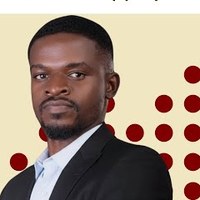
Agabas Agudor built AppCyclers from a 2019 hackathon with no e-waste knowledge into a nine-person AI marketplace connecting Ghana's informal recyclers to industrial buyers.
From Hackathon Prompt to Operating Company: How AppCyclers Found Its Starting Point
Agabas Agudor had no prior knowledge of e-waste when he joined a hackathon organized by a developmental agency in Ghana in 2019. The event's explicit goal was to gather young people around solutions to the e-waste challenge, and Agudor walked away with two simultaneous realizations: the category carried serious environmental and health costs, and it also carried genuine economic potential. That dual framing, harm reduction plus livelihood creation, became the founding logic of AppCyclers.
The company did not incorporate immediately. From 2019 through 2021, AppCyclers operated as a student group, running radio station campaigns and school visits across northern Ghana to build basic awareness. Formal business registration happened in 2022. That three-year delay was not strategic hesitation. It reflected a real supply-side gap: there were no certified downstream recyclers to hand collected material to, which meant the team was storing devices in a backyard while searching for processing options.
"We were not touching those devices until we were able to have our first grant funding," Agudor said. That grant funded a physical workshop, which unlocked the dismantling and component-sorting work that transformed AppCyclers from an advocacy group into an operational business.
The Informal Sector Integration Framework
One of the more distinctive strategic choices AppCyclers made was to work alongside Ghana's informal e-waste scrap dealers rather than position against them. Agudor describes these operators as decades-deep in the industry, holding capital, auction access, and collector networks that a young startup could not replicate. Their core problem was method: they used unsafe extraction techniques that contradicted what AppCyclers was publicly advocating.
Rather than competing, AppCyclers entered a collaboration model. The team built personal trust by drawing on shared regional identity, most of the informal processors in the area are from the north, and then offered technical training on safer dismantling practices. The informal dealers accepted.
"We were able to collaborate with them," Agudor said. "That strategy really helped us in terms of buying their trust and in terms of also providing most training for them and then collaboratively working together and ensuring that we formalized their operations integrating them into a formal ecosystem that we currently building."
This framework treats the informal sector as a distribution and processing asset to be upgraded, not displaced. The practical result is that AppCyclers gained collection reach and community credibility it could not have self-funded, while the informal operators gained training, a formal downstream channel, and a path toward industry legitimacy.
Building Demand Before the Platform Existed: The Advocacy-First Go-to-Market
AppCyclers' customer acquisition story runs counter to most startup playbooks. The team generated inbound pickup requests through school visits and radio appearances before they had a formal business entity or a functioning platform. When students at international schools in northern Ghana went home and told their parents about e-waste hazards and named AppCyclers as the solution, parents called. That word-of-mouth loop, seeded by civic education, became the early sales motion.
Social media amplified the same approach at a lower cost per reach. The team used localized language on air and in person to make the concept legible to communities that had no prior frame for e-waste as a category. The radio stations were not just marketing channels. They were the product's first interface.
The original platform idea, a digital marketplace connecting waste generators to recyclers, dates back to the founding hackathon. Agudor and his team recognized early that the platform would have no users if they launched it cold into a market that did not understand what e-waste was. They built a WordPress site with a pickup request form as a minimal digital presence and focused operating energy on physical collection and processing. The marketplace idea stayed on hold until late 2024, when development of a product called IAT began. By early 2025, an MVP was live with local recyclers, corporate clients, and individual users on board.
IAT: The AI Matchmaking Layer and What It Connects
IAT is AppCyclers' AI-powered marketplace, and its architecture reflects the full value chain problem Agudor has spent six years learning. The platform operates in two connection stages. First, when a company or individual requests a pickup, IAT matches them to a nearby formal recycler. Second, once that recycler has processed devices and produced sorted raw material fractions, IAT connects the recycler to an industrial offtaker capable of purchasing at volume.
That second connection is the gap that trapped AppCyclers in its earliest phase, holding waste in a backyard with no downstream buyer. IAT is, in structural terms, a formalized version of the solution Agudor had to find manually in 2019 and 2020. The platform does not just digitize collection logistics. It closes the loop between generation, processing, and industrial reuse in a way that makes the informal-to-formal transition economically viable for small recyclers who previously lacked offtake relationships.
The pan-African ambition Agudor describes is grounded in this architecture. E-waste is a continental challenge, not a local one, and a matchmaking layer that works in Ghana's north is portable to other markets with similar informal-to-formal dynamics.
Operating Through Capital Scarcity and the Role of Grant Funding
Agudor is direct about the difficulty of building AppCyclers without early commercial capital. The team grew from two people to nine full-time staff, plus part-time contributors, but that growth happened slowly and against persistent resource constraints. The first grant was the enabling event for physical operations. Without it, dismantling could not begin and the business model could not be demonstrated.
Asked directly whether he ever considered stopping, Agudor answered without hesitation: "Several." His account of how he moved through those periods is instructive. He returned to sunk time as a reason to continue, and he reframed the work's scope. Thinking of AppCyclers as addressing a global issue rather than a local one shifted the calculus. A local problem can stay local. A global issue creates a case for scale, and scale creates a case for continued effort.
Frameworks from this conversation
- Informal Sector Integration: Upgrade Operators, Don't Displace Them
- Advocacy-First Go-to-Market: Build Demand Before the Platform Exists
- Two-Stage Matchmaking: Generator-to-Recycler, Then Recycler-to-Offtaker
- Scope Reframe as Persistence Engine: Local Problem vs. Global Issue
Full transcript Click any timestamp to jump to that moment in the video.
-
Oh, welcome to another episode of the Grove. Shout out to our partners Craze and Friends for making this happen. Clean Tech Growth Lab for growing in clean tech. Without them, it would not be possible to interview awesome people, doing awesome things like Agabas.
-
Welcome. Thank you very much, Blake. Oh, yeah. So, we got introduced um through a friend of yours um who I had a really awesome conversation with on the last podcast that I was doing. Uh I told him I was going in this new direction and he said, "I know somebody that is operating in Ghana in the clean
-
tech space and uh and thankfully you agreed to do an interview." So, I'm really excited to learn more about how the operation's been going for you and a little bit more about your story. But for anyone that doesn't know yet, if you could just give a brief introduction of yourself and what you're building.
-
Great. Great. Uh so thank you very much Blake uh for having me on your podcast. I think it's really great to be on board here. Yeah. My name is Agudor Quu Agabas. Um but my first name is Agabas and I am an entrepreneur and founder of Upside.
-
So Upside is a clean techch startup. We based in Ghana to be precise in the northern part of Ghana and our main motive is basically to use technology uh data analysis and as well as community engagement to ensure proper and safe disposal of electronic waste. I think we've been operating um since from 2019 and currently
-
um introducing new products and as well as new uh projects to really ensure that the various waste within the community or within the country are safely collected process and also in terms of ethical recovery and empowering the local communities within our various um community. Yeah, thank you.
-
Yeah, so before we get into what it's been like to grow app cyclers, um because it sounds like a really grassroots effort, you know, from from the bottom up being very uh personto person and that's what I think uh I've also heard in that video that you posted a couple weeks ago and also read and
-
things like that. But before we get into it, um how did you decide to start this company? Have you started companies before? Yeah, I have never started any company before. Um, upcyclist is my first baby, I must say. So, I I grew up um from an industrious home. I think uh where I grew up, we had a family
-
business which was basically into um restaurants and all the food and all those processes. So I really had firsthand experience when it comes to customer service and providing services to people. So growing up I've always wanted to be a businessman but I actually didn't know that this is the entrepreneurship or I'm going to be a
-
founder as it is today but rightly I studied business in my senior high school and as well as in the university. So right at our final year in the university I volunteered for an incubation hub um company in the northern parts of Ghana. So that's where I began to build my entrepreneurship skills and attribute
-
and then as well I was able to joined a hackathon that was basically organized by uh one of the developmental agencies in Ghana here. So the main motive of the hackathon was to bring young individuals together to brainstorm on solution in solving e-waste challenge.
-
So I didn't know what e-waste was. It was my first time in getting to know what exactly e-waste is and how it is posing a whole lot of detrimental effect to human health and then the environment. On the flip side of the coin, I also saw the economic potentials of the business activities around the
-
collection, processing and all of those aspect. And I love the fact that it kind of help solve certain environmental issue but then as well there was also a bit of economic gain out of it. So that really um inspired me to take it up as a young entrepreneur.
-
And then right from 2019 we've been pursuing the idea to to date. So how has it been for so if this is your first baby like you say you know how but you've been around the idea of business ownership since you were younger. How has it been for you to be a business owner and learn what
-
entrepreneurship means in per I mean it's very it's extremely impressive that you're still doing it you know seven years later because um uh you know most most businesses or most companies don't make it that far so you're obviously doing something right but what is this like for you uh personally this journey I think um for me is a bit thrilling to
-
know I'm contributing to something great and also to be able to solve um certain challenges that comes my way. So that has been like the the driving factor um keeping us going from day one till today. Right. So, it's actually um the desire to really contribute to something great within my community and
-
the desire to also see that through our operations or through our venture we are providing a sort of employment opportunities for others. we are contributing in a cleaner environment within the community that we are living. So data has really been um most of the driving factor but then it it has actually been challenging you know in
-
terms of um capital to work with in terms of building a team. All right. And as a young graduate right from school with no prior business management skills or kind of um theory learning. So it was really difficult at the beginning but we made some mistakes but then we also were able to learn from some others and then
-
we keep on going. So this has really been something um we learn on the go and we try to perfect whatever we are doing and to be able to achieve great things. Yeah. Has has there has there been a time where you thought about stopping?
-
Several. Several. Yeah. Several. But then how did you get through those those times? Yeah. So, um I think mostly looking back and looking at the number of years that have been spent um making this to be a reality.
-
There is no way to lose or to quit now. But I kind of also saw a brighter vision, a brighter future with what we are doing, knowing that what we are doing is not necessarily a local challenge. But then it is a global issue, right? That our impact could scale globally, not necessarily locally. So that has also
-
been something that kind of keeps me going on a daily basis. So, so then talking about App Cycler specifically, the the first question that I have is how how has it changed from when you started? Like how different is it?
-
Great. So we we started as a student group right after the hackathon you know we were brought together from different educational backgrounds. So right after the hackathon we came to a conclusion that we're going to pursue this. Um so it was mainly student group and the main idea at first was um we built a form of a
-
platform that could help um individual or businesses to discard off the electronic waste off safely. But then we realized that in doing so we would have to kind of create more education, more awareness to let people know about the products that we are building. So we started mainly in education as a student group moving from
-
schools to schools and as well moving from radio stations to radio station to educate students to sensitize the general um audience on various radio stations for them to know about e-waste the necessary danger dangers it's associated with it and how economically one can also make a livelihood out of it. So it was through
-
a student group moving out. Then we realized that we were getting a lot of um calls, people calling us to come for their waste. And then one of the setback was upon getting most of these calls people reaching out to discard of the electronic waste off. We realized that there were no formal
-
recyclers within the value chain that we can give the e-waste to them for them to recycle. So we had to also hold most of these waste in our backyard whilst we keep on looking forward for various solutions. So that's how it started. Um so right from 2019 with education with um creating more awareness we then
-
incorporated in 2022. So all the business activities regarding upcyclist began in 2022. So that has really been the trajectory right from 2019 starting as just a student group to formulating it into a corporate organization and now we currently have grown from just two individuals to about nine staff working together and as well we do have other part-time
-
people who comes in to also help as well. Hey congrats. Thank you very much. That's awesome. So, you said that there was a point in time where you had to keep all of the e-waste in your in in like your backyard because there weren't there weren't facilities that could take the e-waste.
-
Yes. How did you navigate when was that and how did you navigate that? So I think this was um we fully started that was in November uh 2019. So the 2019 2020 co hit um so um most of the collection rightfully started within 2021 2022 there about where we were now collecting
-
more of this um e-waste. So literally there were informal guys within the value chain of which they move around collecting but then one thing about them was the use mostly unhygienic and um unsafe method in extracting the various um valuable materials from the
-
electronic waste that they do collect. So it was like they are kind of a contradictory method to what we are trying to preach. So we were not able to deal with them. So we were able to get some more detailed trainings by various corporate organizations in terms of how to dismantle how to process most of those
-
devices very well and even getting downstream market that would be able to buy various fractions. So um that's how it it all began and then that's how it went through in terms of the collection and currently we have various facilities that we process this um devices.
-
So you so you responded to that by disassembling the the uh uh the e-waste inhouse and then you resell the parts of it. Is that what you did? Yeah. So, right right after the collection, I think what we were doing was just storing. We were not touching we're not touching um those devices until we were
-
able to have our first grant funding. So the first grants funding um helped us in acquiring like a workshop where most of those um practices in dismantling and processing the various components began. Wow. So so what was it like to get your I don't even know what the like is customers the right word? Like what was
-
it like to get your first customers? cuz I also in that video that you provided it one of the methods that you uh that you guys used was to use localized language to educate people about what this was and then also integrate into your ecosystem. So how was it that you that you grew you know and and started
-
working with more people and getting more customers and things? Yeah, so it it all began through the advocacy programs that we're running. Okay. So let's say for instance when you go to most of these international schools so after educating the kids about e-waste then they go home tell their mom hey mom we have these this is
-
e-waste and it can cause pollution there is this company called upcyclist we have to give it to them then their parents will call us then we go pick it up so that's how it all began and through the radio stations program too we have people calling that they do have this available they do have this
-
available and it's all kind of uh grew up from then but then buy and buy we use social media um and educating people and also trying to use social media as a medium in getting most of the clients or customers that we are looking out for. Yeah.
-
Okay. Okay. So, so what are there what is the the e-waste collection space? Like maybe not maybe not even collection, you know, I'm curious if there's any competitors that you have um where you operate in northern Ghana or are your biggest competitors just like landfills or just trash or just people not taking the extra step to do
-
something specific with their e-waste? like what is the state of e-waste disposal in northern Ghana where where where you're at? Yeah. Um so in Ghana generally one of our biggest competitors are the informal guys. All right. Okay. So these guys really have in terms of the capital to take more materials right and they have been
-
within the industry for decades upon decades now. So they do have the experience in terms of the business accumulating revenues from most of this operation. They do have the networks as most of these e-waste are mostly being auctioned right and then they do also have the capital to go in for the e-ways from various corporate
-
organization auction these devices. Yeah. So the informal guys has been one of the highly competitive factors. But what we've done that has really helped us more is working hand inhand with them. So when we began we literally tried to associate ourself with them. We learned from them. We were able to also provide certain basic knowledge and
-
education for them through partnership collaboration in terms of training most of the scrap dealers. So were they open to it? Yeah. Yeah. They were really open to it. Um, you know, we we come from the northern parts of the country where most of the most of the population within this e-waste um processing are basically northerners,
-
right? So they kind of um buy into our new method of doing things and then they were we able to collaborate with them. Uh so that strategy really helped us in terms of buying their trust and in terms of also providing most training um for them and then collaboratively working together and ensuring that we formalized
-
their operations integrating them into a formal ecosystem that we currently building. Um I think we'll be I'll be sharing more on that with you as well. We currently have a flagship project um a flagship product that we built called IAT and this is more an AI powered marketplace that is currently matchmaking the various ecos
-
the various key stakeholders within the ecosystem right so that is also something unique that we foresee the next future coming up so yeah in terms of competition this was some of the um strategies that we embarked on to have a competitive advantage within the value chain.
-
Yeah. When when did you when did you start developing the the marketplace product? Yeah. So um we we started you know right from the hackathon that was the idea right. Oh wow. And yeah, that was the idea. But then um we were not able to build it because we saw that it was very early
-
and we were not going to get users for that sort of platform. So we kind of created just a website, right? Our first upcyclist website was built with WordPress where we had the sections where people can request for pick up of the electronic waste and all of that aspect but then we were more into the
-
operational aspect where we collect we process and that we are able to sell. So currently I think beginning of the year or late 2024 that we kind of um started the development of the the Ayat platform and we've currently have the first MVP out where we have some local recyclers um on board on it using the platform and
-
then um having various corporate organization and individual also requesting for um pickups on the platform. So this is more like a matchmaking where companies upon requesting we match them to a close nearby formal recycler. Then the former recycler upon processing the various materials and coming up with a recyclable raw materials. Then we are
-
then able to also connect this local recyclers to an industrial optaker who can basically buy or source huge quantity materials from these local recyclers. So this has been their model. That's wild. So so what so then through the through the development of um over the course of the company so that's really awesome to hear that that was the idea
-
from the beginning. Mhm. And then you pursued uh a different style of business model and grew to a point where then you could introduce this marketplace. Um what has the support been as far as like like what is the I mean you said you you know there's a there's an incubator hub and and hackathons and
-
things like this. What is the support like for uh for the ecosystem in supporting your business growth uh in northern Ghana? Yeah. So in terms of support um since when we started there were literally no support within the value chain. Um I think when we started there were more bars on plastic waste. So there were no
-
focus on electronic waste and there were no specific funding opportunity for um entrepreneurs basically operating in this um sector. But I think one of the resilient factor is being very innovative with our models. Okay. So as a mentioned through advocacy sensitizational program we were able to get certain funding that was somehow able to support various
-
operations that we are embarking on. So this has really been most of the models or strategies that we've been implementing until recently we came across various um funding opportunities going in for women entrepreneurs and as well as mainly through the e-waste phase but then um it's it's been great so far and currently advocating for more
-
funding opportunities to be focused within the e-way sector as well. Yeah. So, what so what would you say right now uh given where the ecosystem was at when you started like you said there's like no support and then it's and then it's evolved over time. what would you say is the biggest hurdle that um that you or the company
-
uh is facing at the moment and how is it also an opportunity for you? Yeah. So um the biggest huddle for us was we being very early within the industry and with no infrastructures available for our business to drive on and with government currently trying to put in policy and
-
regulations to really govern the whole industry, right? So, it was more like we were one of the enabling um factors that kind of contributed to a whole lot of things which is currently in place now. and and then finances was also one of the core huddle because I was not a 9 to9
-
job person who has built certain form of savings available to start a business you know um I just completed from the university with no capital available So that was also a bigger challenge. But then we were young so we could basically play around those risks and yeah those were quite um a challenge and
-
even getting people to kind of work with um to be able to employ people and also getting the right skills was somehow difficult in in coming by. But then um think gradually gradually things are currently working out bit by bit.
-
So so you say right now would you say the the hurdle is the same? You say it's uh finding funding and also hiring. Yeah. Yeah. So funding still becomes um the bigger huddle but um but we we know that as as now we more focused on literally using the little we have to kind of grow the trajectory that
-
we are looking in for. Yeah. So still we have raised certain amount but then we need certain an amount to kind of help us to actualize more profit margin and also to be able to grow the team to the capacity that we are looking out for or we are projected for. Yeah.
-
Nice. So what so then so then in the next with this in mind you know with the with the the hurdles and the opportunities and the goals what what are you focusing on for uh the next 3 months or the next 6 months you know whatever timeline makes sense for you guys I mean you said you released an MVP
-
version of this new marketplace so I'm curious about what your plans are for that but um also generally you know what are your plans in in the future? Yeah. So um within the next three months the goal is basically to fully enroll out Ayat uh which is our flagship product. Um so the first MVP was out we
-
had a series of um feedbacks and currently we built on most of those feedbacks. So we're looking forward in fully launching hopefully in January. And currently we do also have um more series of projects that we implementing at the backside. So ensuring implementation of those various projects um running out and then in the near
-
future. So we we we really want to position ourself as a full technological company within this value chain. So we we foresee Ayat being the goto for us in terms of building ayat to be a pan-African movement where e-waste could be traded across Africa.
-
um individual or industrial organization companies looking forward to discuss the electronic waste regardless of their location in Africa should not be a challenge through IAT. So that is truly the dream or the goal or the vision we are looking forward to achieve within the next 5 years to come.
-
Nice. Well, let's go. Let's do it. That's so cool. That's really that's really an awesome vision. Uh and it's really exciting to hear that you guys have uh this this the this version of this flagship product uh being released that you have uh the momentum going into it that you've had the success that
-
you've had cuz it's been because it just sounds like the growth of the company has been so um like you said there was radio station by radio station, school by school, community by community. I mean that is so that is as local as you can get. So it's very exciting to hear that this is
-
um you know this is where the company stands. So my last question that I you know with all this work that you know we talk about going into I'm curious what inspires you to keep going. I didn't get your last question.
-
Yeah. My last question for you is what inspires you to keep going? Great. Ah, that's a great question. So, um, I think what really inspires me more is to really have a good impact, right? I I want to be known for something
-
really great that in my absence tomorrow um my name could be mentioned as part of people who contributed into building something great within Africa. Yeah. So that has really been my inspiration factor and also in terms of to be able to support
-
family to be able to support individual and as well in terms of um being able to be financially independent, right? That is basically fundamental um goal for every entrepreneur. But then the impact aspect also keeps me moving. Nice. Well, it's it's definitely inspiring. It's inspiring me. I know it'll inspire the people listening.
-
What's the best way to um get in touch or follow along with your story? If anyone else was inspired to do so. Great. So, Upcyclers is on all social media handles. So you can follow us at upcyclist which is the a p c y c l e r s. We can have this on all social media
-
platforms and personally I'm more active on LinkedIn as well. So, Agudor Agabas uh on LinkedIn where I usually post most of the growth and also kind of advocate for various um livelihood um implications for the informal sectors and also advocating for better policies within the e-wish sector and influencing a whole lot of change as well. So yeah,
-
you can find us on this various platforms. Awesome. Well, go do it everybody. Go do it. This is awesome. Thank you so much, Agabas, for your time uh for your story. I'm excited to reconnect uh in a couple of months to see where that uh that marketplace is at, to see where you guys
-
uh have gone, you know, what new challenges are um are in the focus for you. Um but yeah, thank you so much for your time. We'll stay in touch. Thank you very much for having me, Blake. And I really look forward to um staying in touch with you to update you on how we've how far we've come. Yeah.
-
Got it. Thank you. All right.


