
Climate Science with Dr Elizabeth Whitney, Biogeochemist @ NOAA National Ocean Service
Dr. Liz Whitney's PhD compared carbon movement across forest, agricultural, and urban coastal sites in the mid-Atlantic, where sea level rise outpaces the global average.
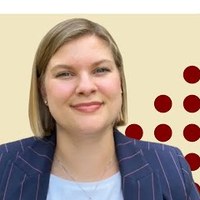
Three Land Types, One Method: How Whitney Structured a Coastal Carbon Comparison
Dr. Liz Whitney's PhD at the University of Delaware was built around a deliberate methodological choice: apply identical sampling methods across three fundamentally different coastal environments. Forests, agricultural fields, and urban zones each interact with water differently, and no prior study had directly compared how dissolved organic matter moves through all three as sea level rise intensifies. By holding the methods constant and varying only the land type, Whitney and her team could isolate the signal of land use from the noise of inconsistent measurement.
The geographic framing sharpened the research's urgency. The mid-Atlantic United States, where the University of Delaware sits, is experiencing relative sea level rise at rates significantly higher than the global average. That regional acceleration made the comparison more than academic. The same carbon-cycling dynamics playing out in Delaware's coastal margins are a preview of what other regions will face on a longer timeline.
Dissolved Organic Matter as a Climate Indicator
Whitney's core object of study is dissolved organic matter, the dominant aquatic form of carbon moving through coastal systems. Tracking how this carbon behaves under conditions of sea level rise and ocean acidification tells researchers something direct about how much carbon coastal environments are storing, releasing, or transforming. That information feeds into broader questions about whether these ecosystems function as carbon sinks or sources under stress.
The three land-use categories matter because they carry different chemical fingerprints into the water. Agricultural runoff introduces nutrients and altered organic compounds. Urban environments contribute contaminants and impervious surface runoff. Forested edges behave differently still, with leaf litter and root systems producing distinct dissolved organic signatures. Whitney's framework treats land use not as a background variable but as the primary driver shaping how carbon moves once it enters coastal water.
From Lab Basements to Field Work: The Research Path That Shaped the Science
Whitney's research orientation was not always coastal. Her undergraduate work at the same institution where she and Blake Newcomer met included two distinct environmental chemistry projects. The first involved using naturally occurring clay materials to remove PFAS, the class of synthetic compounds widely known as forever chemicals, from water. The clay-based filters could be regenerated and reused after stripping out the PFAS, offering a contrast to granulated activated carbon systems, which require disposal once saturated.
The second project was her senior thesis: using gold nanoparticles on a substrate to create five-micron sensor sheets capable of detecting heavy metal contamination in water faster than conventional lab-return methods. The goal was rapid, in-situ signal detection for lead and similar contaminants in areas of known risk.
The turn toward biogeochemistry came through a field course that included two weeks of fieldwork in Panama. That experience reoriented her understanding of what a research career could look like. "I realized that I could combine this love that I have for doing science and having this hands-on learning with my love for also being outside because I was studying chemistry before in the lab in a basement with no windows," Whitney said.
The Insularity Problem in Academic Science
Whitney draws a direct line between the historical origins of academic institutions and the access problems that persist today. Scholarship developed within wealthy, insulated communities, and that legacy shapes who gets to participate in high-level research now. She frames this as a structural problem with concrete consequences for climate work.
"I think it's also so necessary that we start to shift the narrative that science is elite always because we can't solve the problems that we have today without everyone's voices," Whitney said.
Her argument is that the climate challenge is too intersectional to be addressed by a narrow research class. Environmental change affects communities unevenly, and those communities carry knowledge and stakes that closed academic systems routinely exclude. For Whitney, community engagement is not a communications strategy applied after the science is done. It is a condition for producing science that is actually adequate to the problems it addresses.
Sustaining Research Under Political and Funding Pressure
Whitney is candid about the psychological weight of working in climate science during a period of active political resistance. Funding uncertainty, institutional insularity, and the sheer scale of the problems create compounding pressure on researchers who have invested years in this work.
Her response is not to minimize those pressures but to locate motivation in the breadth of the community working on the same problems. "I'm not alone. There are teams of scientists and policy makers and researchers and funders and founders and all of these incredibly talented and smart people who are also driven," Whitney said. "That drive, knowing that there are people who care, is what keeps me going."
This framing treats collective commitment as a practical resource, not just an emotional one. When individual momentum stalls against systemic resistance, awareness of the wider effort becomes a functional reason to continue.
Frameworks from this conversation
- Controlled Land-Type Comparison: Holding Methods Constant Across Forest, Agriculture, and Urban Coastal Sites
- Dissolved Organic Matter as a Sea-Level-Rise Stress Indicator
- Community Voice as a Research Design Requirement, Not a Communications Add-On
- Regenerative Filtration: Reusable Clay-Based PFAS Removal as an Alternative to Disposable Carbon Filters
Full transcript Click any timestamp to jump to that moment in the video.
-
Today on the show is Dr. Liz Whitney. Very special episode for me. Uh Whiz is a a good friend of mine. Uh when I started doing the podcasts, I have always been fascinated. We've had podcastlike discussions about her research uh and she finally agreed to uh come on to the show and discuss it. And
-
so uh she's recently completed her PhD at the University of Delaware uh analyzing how uh carbon moves through uh coastal environments and uh how we can understand them. Before completing her PhD, she also did very interesting research on forever chemicals and heavy metal contamination detection. So we also get to talk about that. But in the
-
conversation, we dive deep into uh the coastal dynamics of carbon in forested areas, in agricultural areas and in urban environments. Uh what that says about uh how the environment is changing, how the climate is changing. Uh we also get into a discussion about uh a real world application of the research and uh the economics of running
-
uh a lab and how there are shortcomings uh in the environment as a whole with education and uh the economics of running a lab especially in this political environment uh that have uh lasting impacts on the rest of the industry. uh all things that I expand on uh in my articles and uh my newsletters
-
um that you can sign up for at earnonward.com. Thank you always to uh our partners Clean Tech Growth Lab. If you're looking to grow in the clean tech space, they are the experts. They're also wonderful people. And if you're looking to grow in any other industry anywhere in the world, you want to go with Craz Friends,
-
that is the producer of this podcast. So, thank you to them. And now for Dr. Liz Whitney. Dr. Liz Whitney, welcome. Happy to be here. It's good to see you, Blake. I uh that was it's it's I just want to recognize for everyone that will ever listen to this, it was a very special
-
moment for me to be able to address Liz as a doctor because we've known each other for a long time. and um is something she's been talking about for a long time and a huge accomplishment. So, shout out to you for that. Uh there's a lot more that I could say about the work
-
that you have done, that you do, who you are. But before we get into all of that, uh if you could give a brief introduction of yourself and what you're building. Yeah. Um I'm Dr. Liz Whitney and I recently completed my PhD. So that's why the doctor is such a big deal. Um but I
-
consider myself to be a [snorts] biogeeochemist and I study how carbon moves in coastal environments to understand um how climate change is impacting our natural and our built environments. So uh that that that touches a very special place in my heart. Something that we will uh talk more about. But uh that biogeeo chem aspect of Liz's career
-
is actually where we met. We took a class in college together uh around that. And she obviously took it much further than I ever did [laughter] about understanding those those [snorts] core concepts. So I'm actually uh I'm sure this will be educational for me. uh just like that course was and um something
-
that I think is really impressive about what you've done and something that I want to um elaborate on is just that. So uh in the the clean tech the climate tech space there's a lot of attention um around funders around founders um there's obviously talk about u policy and policy makers [snorts] uh but less so do I see a lot of
-
attention um around researchers or research uh I I just think it's less shiny you know there's not like this allure where it's like oh money VC investment stuff like that that stuff is important, but um um you know academic research and research in general is also a really important arm of the entire
-
ecosystem. And so um could you talk a little bit about how you got to where you're at? uh you know being a posttock um you could start I think you know where you first realized that there was an interest uh in chemistry for you and um just a little bit about your journey to now.
-
Well, if we're starting with my love for chemistry, we're going all the way back to elementary school because I have always loved learning. And one thing that's really fun about chemistry is that it's a very visual science. Um there are parts of other sciences that are really visual, too. Like we've got [snorts] um in biology what we call
-
charismatic megapa. um that are these like animals that people can get really attached to and really love. What I love about chemistry is that you can mix two things together and see a reaction happening right before your eyes. So, even as a kid, that's something that I was always really drawn to. And I ended
-
up going to college with Blake um and studying chemistry and really enjoying the research aspect. getting to learn hands-on is much more exciting than just sitting in a class and taking notes and doing rope memorization. So, I really love the laboratory research aspect of things.
-
Um, but in terms of getting towards the biogeeochemistry side, as a part of my major, I got to take this biogeeochemistry elective and that class was so incredible because we got to go to Panama for 2 weeks and we did field work there. And that is where I realized that I could combine this love that I
-
have for doing science and having this hands-on learning with my love for also being outside because I was studying chemistry before in the lab in a basement with no windows. I didn't really know or have exposure to the life of fieldwork. Um and that is where I really was driven to pursue a PhD to
-
continue to learn, continue to do that research. Um but ultimately I ended up choosing the field of biogeeochemistry because I got to go outside too. So that's a little bit of um how I ended up there. Uh while I was in grad school though, I realized that the academic world, um you talk about how it's really
-
important, but also how it's not this like bright shiny thing. Um I think it's a world that's very insular and very isolating. And I think that goes all the way back to the history of like how academics started. um scholars were very wealthy and there's this barrier between um doing the highest degree you possibly
-
can and the rest of the world. So yes, academic research is very important, but I think that it's also so necessary that we start to shift the narrative that science is elite always because we can't solve the problems that we have today without everyone's voices. And so that's something that I'm really driven to
-
moving forward in my career is making sure that everybody has a voice at the table because especially in the climate space, there are so many other intersectional issues that impact climate change that are impacted by climate change. and bringing those spaces all uh all together is kind of I think somewhere that we can move forward
-
and hopefully make positive changes. Yeah. Wow. We we I I usually try to bring that type of energy around, you know, towards the end of the uh the episode, but we're just bringing it now. That's right. Bring everyone together.
-
[laughter] There was uh well, two things. First, three things. You said charismatic megapana and that is a term I've never heard of my life and I love that apply applies to many people many things in my life. I don't know if that's the way to interpret it as a non chemist but that
-
is a hilarious term to me too would like to thank uh professor Dave Gillicanin for that class uh bowim where we met. And then um and then third before we get into the main bulk of uh the research that you ended up doing um in your PhD, you were do you were contributing to
-
some uh interesting environmental chemistry research uh at Union, right? Yeah. I worked on two projects there. Do you want me to talk a little bit about them? Absolutely. So the first project [snorts] I worked on was understanding how to use naturally occurring clay materials to remove PAS or perflloral alkal substances that um I'm sure a lot of
-
people are really familiar now um with the that term. These are the forever chemicals that stay in the environment [snorts] forever. um they don't like to break down and we use granulated activated carbon filtration systems a lot of the times but once those filters are full they have to get thrown out. So we were
-
using these naturally occurring clay materials that we could regenerate um after collecting uh or removing PAS from water. um we could remove the PAS from the filter and dispose of it in a different way in an appropriate way rather than write down our drains and then um use them again. And we had a
-
pretty good return um like rate of reuse on those filters which was really interesting. Um go ahead. So was that was that the uh you said there were two so was that one of them? Yep. That was the the first project I started and where I really got bitten by the the laboratory bug.
-
Okay. Um and then the second project I worked on was using give me a second. This is what I did my senior thesis on but [laughter] big. So this was a physical chemistry project and we were using gold nanop particles on um this substrate to try and create these nano sheets. these really small
-
five micron sheets that could be used as sensors to increase the um reaction basically increase the signal of heavy metals in water. So the idea here would be to take these sensors, put them in places where lead contamination is known or other types of chemical contamination and be able to pick up these signals faster um than if we had
-
to go out and collect a water sample, bring it back to the lab and figure out how much was in in the water at that time. So, those were two really groundbreaking and interesting studies that um are still continuing today.
-
Wow. Well done. Yeah, I I had no idea about that second one. And so, the the way that you I was really I was like really focusing while you were explaining that cuz uh and I think you did a really great job synthesizing that. So, thank you for you know for my ears for making that
-
a really long time since I've uh thought about those. So, you Well, that Well, that was cool. So um so again so uh before we get into the the biogeeochem space, had you had you always set out to do work or think about uh the climate, you know, the environment, these types of things, or is it something that you
-
just fell into? Yeah, I've been really passionate about the environment my whole life. Um, it probably started with some school video on recycling or something and I [snorts] came home and I was like, we have to recycle. Um, I just nature is all we have and we have to protect it. And that doesn't mean
-
that I think that everything people do is bad. I don't think that's true at all. I think that we can heal nature just like nature can heal us. But I've always been really driven towards that protection of the environment. And as I've grown in my studies and in my career, I've realized that I care a lot
-
about protecting communities as well. So, um, those are interconnected, as I said before, and hopefully we can, you know, use those two things together, um, ecosystems and communities to, uh, protect ourselves and the environment in a harmonious way.
-
That's it. So, so that's that um that's a that touches on my followup to that which was so for me what you mentioned was recycling. And I [snorts] think I would I mean I I don't know if you asked me seven years ago, you know, Blake, what do you want to do? And I say, I want to save the
-
planet. I want to do something sustainable. I want to do something environmental. Um but my first introduction to that whole world that that system of thinking was recycling and that was the first thing that I got passionate about I was like wow this is you know this could this is something that could be done a lot
-
better than it is and that's the first thing I got excited about and then the more that I learned about it the I mean yeah the less excited I became about it because I understood how complex it was and and you know this this excitement and optimism had to be grounded in reality about not only what
-
was currently happening, but why it was currently happening and what it took to to change it. And so clearly, cuz we're on this podcast together right now, I'm still very passionate about clean tech, climate tech, it's just has changed and taken a to a totally different form than it was in the past. And so, how has your
-
passion, you know, your love for for nature and these things? I mean, you mentioned a little bit of it. It's changed to more of, hey, this is communities, too. Uh, but how has it changed over time the more that you've learned about, you know, the deeper you've gotten into your your field of
-
research or um, you know, the more you've learned about how the world works, you know, how has that love or that drive changed? I think that's a really great question because we are living in a really challenging time.
-
Um, we're faced with just these massive and seemingly insurmountable issues. And the more I've learned about some of these issues, the more frustrating it can be to keep going because they feel so big and there are a lot of systems in place that are preventing us from solving these problems. But I'm not
-
alone. There are teams of scientists and policy makers and researchers and [clears throat] um funders and founders and all of these incredibly talented and smart people who are also driven. So that drive knowing that there are people who care is what keeps me going because it feels so big and it can be really
-
difficult to kind of push past that. But why would we give up for something that we care about just because it seems difficult. Um it yeah it's a roller coaster every day sometimes especially in the in the um political climate that we live in right now. But I'm not going to give up
-
because there's too much at risk and there's too much good that will come out of pushing through. Yeah. Nice shout out to these that that I mean not in the way that you referenced it before, but that sounds like a nice shout out to the community that that you're inside of um that
-
elevates you. Absolutely. So, so then now uh I would like a little bit of a lecture almost because I'm excited to learn. Uh in the in the uh you know the years that you were doing your your PhD research, could you first succinctly describe what your PhD research was about?
-
Yeah. So I studied the climate change effects of sea level rise and ocean acidification on how carbon moves in coastal environments adjacent to forests, agriculture fields and the urban environment. How how is it that that your research attacked uh those three different uh g like uh those environments because you had said you had said forests, you had
-
said uh near agriculture and you said urban environments. Those are the three. So those seem like extremely different places um and with with extremely different uh inputs and outputs and you know real world context. So how how is it that you attacked all three of those places?
-
Well, we went back to the fundamentals of the scientific method. So we use the same methods in every location. And that was the point of choosing those t types of locations is that there hasn't been a comparison previously on those types of environments. Specifically looking at how the dissolved organic matter or the
-
main um aquatic form of carbon is moving in these environments as sea level rise is increasing. And the importance of looking at these different land types and land uses is that we are um I went to school at the University of Delaware which is located in the mid-Atlantic of the United States and that region is
-
experiencing relative sea level rise at much higher [clears throat] levels than the rest of the globe. So, not only were we interested in understanding how are these uh land types different from each other, but we were also really interested in how are these land types changing over time as a result of these
-
climate change issues. How is it that you would were were these uh samples that were collected physically? Were these extracted from existing data sets? So, I uh had this incredible team working with me uh from the University of Maryland, and they had these automatic water samplers called Isco. Um, don't ask me what that stands
-
for. I think it's just a brand. Um, [laughter] we we could program these water samplers to collect water samples whenever we wanted. So, we had ours programmed to collect samples at six different sites um across the same 24-hour period. And then our team would collect the samples. They would bring them back to the lab and then filter and
-
acidify them to make sure that we were just looking at the um dissolved organic matter portion that we were interested in. Um and that was the point. The filtration and the acidification achieves those things. Um because dissolved organic matter is really complex. Um and then they would ship the samples to me or in some cases um we
-
would uh work on processing the samples together. But this is the part that is like it seems really complicated on the outside and if I use the big scientific jargon it feel overwhelming but I've got a really fun analogy.
-
Yeah. Do it. So, I like to think of myself like an interviewer for water. Okay? So, I was interested in understanding what the carbon was made up of. Um, because it's not just carbon. There's dissolved phosphorus, nitrogen, and sulfur as well in these uh in these compounds. And so, I would run these
-
samples on four different instruments. And each instrument was like me asking that sample a different question. So I used a total organic carbon analyzer to figure out the amount of carbon in each sample. I did um spectroscopy to understand where that carbon was coming from because um seeing the absorbent signal of these
-
photoreactive chemicals can tell us if the carbon was coming from the ocean or from the land or if it was a mix of both. We used fluorometry to understand the bulk properties of the part of the organic matter that fluoreses under um light and that could tell us basically structural components and then I also used size exclusion
-
chromatography which tells us the size distribution of the molecules that make up the dissolved organic matter. So, so be so uh to continue suspending this resolution of uh what you ultimately found was was this uh the methods that you described and um the goal uh the questions that you were asking uh in in in the interview just
-
just like uh me to you right now [laughter] which a great analogy. Um, is this something that was uh the same over your four years? Is this an ongoing project? Um, did this change at some point uh throughout the four years?
-
So that piece of the project was carried on throughout the whole four years and there are still researchers trying to figure out some of those questions because [snorts] those methods that we were using have been used in um land-based um like lakes and rivers with really great success. And they're also used on
-
ocean samples and just like across the board, those are the gold standard ways of understanding how organic matter is changing. But what's really complex about estuaries and and coastal areas is that they are so constantly changing, even more constantly than pretty much anywhere else, because you've got tides coming in and out every
-
day. And that's pulling when the tide's going out, that's pulling carbon from the land. When the tide's coming back in, that's pushing up carbon from the ocean. And these samples are so like you're looking at a snapshot of a 24-hour cycle trying to understand what's going on. And these samples have so much sediment and um particulates
-
that don't necessarily play a role in the carbon cycle in the organic carbon cycle um that are going to stay stuck in there just because the water's so turbid. So we've got a lot of artifacts that we're dealing with and it's really hard sometimes to piece out what's actually happening. And we realized over
-
the course of my studies that these methods aren't necessarily usable or um interesting as explanatory as they would be for a sample that was coming from a less complex environment. Oo. So, uh I guess well partial drum roll then is that a is that a conclusion that you ended up drawing from this from
-
from your PhD research? Yeah, we were not expecting that. We were really um confident that our methods would work, but because the salt levels are changing all the time, it's kind of hard to compare a sample that's coming from low tide that's not very salty to a sample from high tide that is
-
very salty. Those uh salt levels can can alter the way that the um chemicals are looking under those different um instrument instrumentation methods. Sure. So, there needs to be some kind of normalization. Um, and I didn't have time to to work on that, but that is sort of a big um thing to consider.
-
Wow. Well, that I mean that seems I mean obviously not an ideal conclusion, but that seems like a very impactful uh and meaningful conclusion from uh from your research is the fact that hey we've spent a lot of these years using this instrumentation to uh collect the data to ultimately draw some kind of
-
conclusion and the conclusion that we drew is that this instrumentation is ultimately not ideal for this research. So, have you seen uh or at least had discussions with anybody else in in in the similar field about that specifically? Like if if you're not using the in, you know, those instruments, then what else is
-
available? I mean, the thing that's tough is that we're looking at these compounds that we can't actually see. So, we have to just continue to do more research to understand these environments as they change. and figure out ways to use what we have to keep learning, keep developing our understanding. Like it's not as simple
-
enough to just say like, oh, this method that we've been using on these other environments doesn't work. Like how else do you keep researching? You know, you can't just develop these new tools that have been in development for decades now.
-
So, it's a big challenge. I mean, these instruments are expensive. Their upkeep can be quite painful. Um, and another challenge on top of that is sometimes our instruments are pretty old and they're not supported by the um companies that make them anymore because the companies want to keep growing and um have us buy a new instrument and we
-
can't necessarily afford that. So there are a lot of challenges just from the like funding side and so I think this really points to just we need more research in these areas. Okay. Yeah. So so I I made a bookmark because I want to come back to that but just just to just to close off this
-
segment. So that is I think a really interesting um uh conclusion to draw from your research. Were there any other major conclusions that that you ended up drawing in your research? Yeah, so my research was one piece, the biogeeochemistry piece in a whole environment study. So there were conclusions being made about how sea
-
level rise is changing the geomorphology and how the geomorphology is actually impacting the way that sea level rise is changing environments. Um there was a group that was looking at the ecology and another group looking at the hydrarology and so all of those things um impact each other and the research is still ongoing in all of those areas. So
-
I don't have the like major huge Oh yeah. findings to share unfortunately. But that being said, um the driver of organic carbon in estuary, the estuaries that we were studying, regardless of the hydraology, uh regardless of whether it was a um forested area or an agricultural field, um the driver of the way that carbon moves is going to be the
-
tides or um the big storm events that will bring lots of water inland. um which isn't a groundbreaking finding that's pretty well known across the field but that hadn't been studied directly in the field sites where we were working. So it was exciting to see that we had a finding that corroborated other findings
-
across the globe. So, so then um like big picture question and you can take it from the perspective of this this instrumentation conclusion this conclusion that you're speaking to about um uh the directionality and the drivers of uh the organic carbon in these things. What is the real world impact or real world context of this
-
research project? So as sea levels rise and waters pushed inward, this salt water that cannot sustain crops or forests, the land is changing. So farmers who have been farming on the coast for generations are no longer able to grow their crops because it's too salty. People who used to go to a certain forest to hunt or do
-
other forms of recreation are seeing that land change from forest to marsh. And that has huge implications for the people who live in these areas. But environmentally speaking, if we're just thinking about this from the perspective of how is the environment doing, these marshes are protecting the upland area from erosion. They're protected from
-
huge storm surges. So the implication of this research is that people's land is changing and we need to understand how to adapt with it. But also the environment is changing as a response to this thing that's happening and it's doing what it can to protect itself.
-
Have have you had conversations with again other people in the same space or maybe uh in in different you know again commercial spaces or policy spaces that have that have digested this this research and uh are working uh on solutions or working on this problem in a particular way that you know of.
-
Yeah. Coastal resilience goes by many different names depending on the location you're in. But coastal areas where the majority of the population across the globe lives, they're all looking at this issue of sea level rise and trying to understand how to protect their communities from major floods with hurricanes or typhoons. Um how to
-
reinforce their buildings. insurance companies are taking advantage of this issue and not insuring certain places. So, anyone and everyone in urban planning and and any kind of urban policy development is thinking about this issue. It's a it's a really big question and problem for a lot of places. So um something that I something that I wanted
-
to um uh to talk about also because you'd mentioned it is what was your experience? You were working in the lab but to what extent were you involved with uh running the lab as far as the like getting the equipment serviced keeping it upkept um you know dealing with vendors and things like this.
-
Every lab is run differently but in my lab we were all our own lab managers. So, if we were running out of supplies, we had to order them ourselves. If an instrument wasn't working, we had to call the manufacturer and see if we can get some support. Um, it was a pretty uh good experience to learn how to do
-
that type of project management. Um, and organization is really important for keeping yourself moving forward because there was no one else there to do it for you. Got it. So, then Dr. Liz, tell me about the uh a little bit about the economics of running your lab and so some of the conversations I've had and like you
-
said, you know, labs are ran differently, but ultimately there's a lot of um similarities between uh running a company and needing to keep it afloat almost just uh often it's been described as just buying yourself time. uh you know again in in in the founder context it's buying yourself times so that you can uh find the product market
-
fit that that you know you believe is there and that will start generating revenue and blah blah blah but from a lab's perspective um what is the role of revenue because there's not really there there is production from a lab there is um there there is an expected output from the work that's going into it But
-
it's not the same where where I mean I'm sure there's examples of it but I'm not aware of a lot of them where you're selling your research or you're selling a product in order to fund the lab itself. So what's the relationship between funding and running a lab and dealing with these vendors and you know
-
budget cycles and all of these things? Yeah. So in a more typical time when there's funding for science at the federal level, they will put out these requests for or the these notice of funding opportunities and then the lab groups will submit proposals and hopefully receive them and sort of buy themselves time x number of years,
-
usually three or five years to do that research with the expected output of one or more journal articles. And that's sort of the return on investment that these funders get is this research that's done. Okay. So it's usually the principal investigator or the laboratory advisor, usually the professor who's running the lab um to look for these opportunities
-
to apply for them or and work with the students to apply for them. And then it's the students job at the graduate level level typically to um carry out that research and make those publications happen. So you so you said you said mostly it's grants and funding from a federal level.
-
Yep. In a in a more typical time um that funding has been pretty roughly cut up at this point. So, um I think the academic world is still reeling from that a little bit and trying to figure out where their money can come from.
-
But, um an avenue is philanthropy. You know, philanthropists will donate to universities and colleges [snorts] um for buildings and other infrastructure. And hopefully moving forward they can step in and fill some of those funding gaps where the federal government is uh not funding science right now. So, so is that I mean would would that fall under
-
the same category as grants though or are they in a different Okay. Uh are are there similar um is is the funding body generally NIH is that it depends on the scientific field of study? NIH is probably the biggest funer of research in the US um on the academic side.
-
Okay. There's also the National Science Foundation. Okay. Um they're a really big funer for a lot of graduate universities. Um the National Oceanic and Atmospheric Administration does some grant funding uh for academic research. Um those are NIH and and NSF are definitely the biggest ones.
-
Are there any on state level that are significant to any do you agree? I think that's going to depend on the state. um like the New York State system does a lot of funding for graduate research, but generally speaking, in terms of the revenue that universities are bringing in from grants, it's not
-
going to be as high at the state level just because a lot of those states are getting their money from the federal government. I see. To funnel it through the state to those universities. Got it. Um well with with this then is there so where I mean where do you see it going like based on your experience
-
in this lab getting uh a PhD you know the amount of time you spent in these environments is is there and you know any idea is welcome like is is there some some other means of uh funding science that is uh that that that is you know deviations away from how things currently are given the fact
-
that I would assume uh you know in in this administration like there's not well I mean you said it there's not a lot of uh uh money going to science uh as as there once was and there's a lot of adjustment that's that's uh needing to be had. So do you see any
-
alternatives to funding outside of um just more grants, more uh philanthropy? so that there's not as much uh reliance on uh federal funding. I think the way things are right now, we have this cultural shift that has to happen because there's this idea that graduate school is really pompous and for the elite only. And education is the
-
way out and through a lot of economic challenges for a lot of people, but it's also a barrier. So, I really think that we're going to lose a lot of potential students because there is no funding right now and this is painting a really bleak picture and I think that we're going to face a
-
lot of challenges in the academic world. The academia is already facing much lower um acceptance rates and things like that. So I think that we really just need to I think there is a funding issue acutely. Yes. But I do think that we will get back to funding science in the next few
-
years hopefully. Um but I think the bigger issue is going to be how do we encourage people to continue to apply to these programs when they're not painted in a pretty light. Sure. Um grad school is hard. It's a huge mental battle.
-
anyone can get a PhD. It's not about smartness. It's about being driven. And probably you're going to complete a PhD out of spite. Whether that's to, you know, some person who told you you couldn't do it or yourself. Um, it's tough. It's really hard. But it's not because of how smart I am that I
-
[clears throat] have this degree. It's because of how determined I was just to do it and to prove to myself and the world that I could do it. So, I don't think that the funding issue is going to be as long-term of a problem.
-
Gotcha. As it will as culturally it is to just I mean grad students aren't paid that much. But they are the backbone of universities. Without them, research doesn't get done. Then the papers don't get published and so then the grants stop flowing in. So I think it's a cultural shift that has to
-
happen around education and around um especially higher education to sort of solve the issues that we'll have moving forward rather than funding. Well done. That was that was a really nice way to go. Hey Blake, yes funding and actually this is it. [laughter] That was that was that was really that was really elegant. That was awesome. Um so
-
three last questions for you. So, I'm currently doing um uh a series and uh it's it's highlighting uh women leaders in science. And so I'm curious uh if you could detail your experience as a woman in this field uh doing the research and also uh if there's uh a younger woman that's listening to uh this podcast and
-
thinking about going into uh a hard a hard science field uh like you did uh applying for grad school, applying for PhD like you did like you're saying um you know what would you say to them? Wow. I think that anyone can do anything.
-
Truly, I truly believe that anyone is capable of doing whatever they put their minds to, but finding good female mentors is so crucial. going to a small liberal arts school for undergrad and having this incredible chemistry department that was full of women to the point where they had to hire men for diversity was just this
-
wonderful utopia almost of support and I definitely took that for granted because when I got to grad school in a male-dominated field nobody looked down on me directly or said I couldn't do it but there were definitely discrep encies between the way men and women were treated in the labs and there were other
-
racial and religious um issues as well that I saw other people go through. And so finding mentorship that um with people that you can relate to is just if I didn't have the mentors in my life that I do, I don't know that I would have completed my degree. Um because one thing that they told me early on is that
-
you never get over imposter syndrome as a woman. And so far in my experience that's true. Um it's a roller coaster of ups and downs and um feeling very very capable some days and then challenges arise and it's like well I'm just a woman. What am I doing here? And that's ridiculous.
-
You're here for a reason. You're capable. Um, but having those those women in my life really pulled me through. Nice. Thank you for that. I think you um uh my my my final two questions is uh related to something that you were getting at but I mean and you can take it from uh you know any perspective like
-
uh you know you just gave your experience this woman or this uh grad application or something completely different but I'm curious where you're at now and with the work left to be done what is the biggest hurdle that you're facing at the moment and how is it also an opportunity I think there are two hurdles
-
to touch on. Um, number one, it's a really tough job market and there's so much work to be done, but everybody is applying to those jobs right now. But that's an opportunity to get my name out there, see what other avenues I could go down.
-
You know, I've got this kind of non-traditional path going from pure chemistry to being a field scientist and going into the geocciences. So my path is going to go down a different avenue that I didn't think was possible, which is really scary, but also really exciting. And then I think more broadly speaking, sort of big picture,
-
we have this challenge of combating climate change. And I think that's a really exciting challenge to face because we have a lot of solutions and all these really talented people who are going to work on um on fixing those fixing these issues that are that are arising. So big hurdle but it's going to be a really big reward
-
as we work through it. Nice. Well, within all of this um I'm curious Liz, Dr. Liz, what inspires you? There's a lot that inspires me. Just being out in nature is really inspiring. Nature is very resilient. Um, mother nature will always succeed and and come back from whatever people throw at it at
-
her. Um, but also communities are really resilient too when they're given the resources and the space to have their voices heard. Um, I'm I am in this position now to hopefully leave the world in a better place for the people who have sort of paved that path for me.
-
So, I'm inspired by the people who wanted to have these opportunities and didn't because women didn't go into marine biology 50 years ago. Um, and I'm inspired by the communities who who need our help and um, hopefully we can give them the voice that they deserve.
-
Let's go. Let's do it. [laughter] Well, if anyone else was inspired because that was very inspiring in itself to follow along with your journey. What's the best way to do that? You can follow me on LinkedIn or connect with me on LinkedIn. Um, and yeah, I don't have a website or anything, but
-
I'm Elizabeth Whitney on LinkedIn. Uh, follow along to see where I go next. That's right. That's that that's that's a that's a web page. That's good enough. There'll be information there. Well, Liz, thank you so much for your time. I enjoyed this conversation so thoroughly.
-
Um, I'm excited to stay in touch and like you said, see where see where things go. But seriously, thank you for your perspective on all these things and I'm looking forward to the next one. My pleasure.


