
Building Nature Tech Communities with Paige Perillat-Piratoine, Nature Tech Collective
Paige Perillat-Piratoine built community across army bases, COVID hackathons, and a hygroscopic electricity startup before landing at Nature Tech Collective.
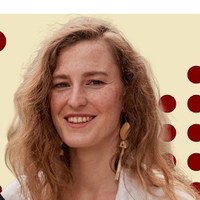
Why "Community" Is a Fraudulent Word in Most Founders' Mouths
Paige Perillat-Piratoine opens with a definitional correction that shapes everything else she does at Nature Tech Collective. "The word community is probably overused," she said. "A lot of businesses are using that word in a way that's fraudulent. If I was to give a definition of community right now, it would be a group of people that feel like they can actually lean on each other or at least contact each other and be friendly with each other. Whereas a lot of people are using their audience list and saying that's my community. Well, it's not. They can't talk to each other."
This distinction, audience versus community, is the operational foundation of her work. An audience receives information. A community exchanges it, and members can reach each other without the platform owner as intermediary. Perillat-Piratoine treats that peer-to-peer reachability as the minimum viable test for whether a group qualifies as a community at all.
The Three Contexts That Shaped Perillat-Piratoine's Community Framework
Perillat-Piratoine's approach is not theoretical. She has built or animated communities in three structurally different environments, and each left a distinct mark on how she thinks about the work.
First, hyperlocal neighborhood organizing in London, where she gathered residents, businesses, and nonprofits around a shared vision for a specific place. Trust was built face-to-face over long timelines.
Second, decentralized open science networks during COVID, organizing hackathons that connected clinicians holding cancer imaging data with developers who could build predictive tools from it. Participation was fast and values-driven. Members came pre-educated in norms like replicability and accessibility.
Third, Nature Tech Collective, a private-sector community spanning organizations that measure, restore, or finance nature. The psychology here differs sharply from open science. Members are startups competing in a thin-demand market, which means every sharing decision carries commercial risk.
Her army-brat childhood, moving nearly every two years, runs underneath all three contexts. She describes community building as something she "fell into by chance" but stayed with because it was "exactly potentially what I was missing personally in life." That autobiographical honesty informs why she treats trust not as a soft value but as an engineering problem.
The Sharing Paradox Inside an Emergent Sector
The central operational tension at Nature Tech Collective is what Perillat-Piratoine frames as the sharing paradox. The sector is early, the number of startups is large, and the number of paying adopters is small. Perillat-Piratoine notes that within the collective, roughly a handful to a dozen startups have already shut down because the market was not yet ready for what they were offering.
In that environment, members must constantly calibrate: how much do they share to advance the sector collectively, and how much do they withhold to protect their commercial differentiation? Neither extreme is viable. Full openness can commoditize a startup's core insight. Full secrecy undermines the collective intelligence that helps every member survive the early-market culling period.
Perillat-Piratoine's role is to design the spaces and norms that make the right calibration possible. The first structural layer she describes is a vetted Slack forum where members know that anyone they contact has already passed through the same intake as they have. That vetting creates implicit permission. "You're also part of the Nature Tech Collective, hence I can reach out to you and say, 'Hey, I'd love to speak,'" she explained. Shared membership functions as a trust shortcut that an open LinkedIn connection cannot replicate.
Hygroscopic Electricity and the Empathy That Came With It
Perillat-Piratoine brings something most community builders do not: direct experience sitting in a founder's seat. Her project Electric Skin, developed with four collaborators, worked from research out of UMass Amherst on a soil bacterium that grows a protein capable of generating electricity from humidity gradients rather than from wind, solar, or other conventional inputs. The team grew the protein in a lab setting and embedded it in a biomaterial designed to produce that humidity gradient continuously. They reached prototype stage, appeared on the television program Stars of Science, and received European funding before entering a hiatus while the team reorganized.
That trajectory, belief, external validation, incomplete market fit, pause, maps closely onto what many Nature Tech Collective members are living through. Perillat-Piratoine is explicit about what that experience transfers to her community work: "It allows me to understand where they're at and the difficulties they're facing and how to talk to them and how to gather them so as to make them understand how they might collaborate. I guess it's giving me a lot more empathy for the people that I'm working with right now."
Empathy here is not a soft skill addendum. It is the mechanism by which she can credibly design spaces for a founder experiencing market pressure she has personally felt.
Building the Scaffold: From Newsletter to Peer Network
Perillat-Piratoine describes community infrastructure as a sequence of progressively more interactive layers. A new member of Nature Tech Collective typically enters through the newsletter, the broadcast layer. From there they gain access to the Slack forum, the conversational layer where peer-to-peer contact becomes possible. The forum works because membership is screened, which means the social cost of reaching out to a stranger is lowered substantially.
She is careful not to prescribe the specific platform. "It could be a WhatsApp group, it could be a Circle, it could be whatever," she said, pointing to function over tool. The function is always the same: give members enough visibility into who else is present that they can identify relevant peers and enough confidence that those peers are vetted that they will actually initiate contact.
The deeper scaffold is the programming layer, events and structured convenings designed around the sharing paradox. The goal of that layer is to create formats where members can surface shared challenges without exposing proprietary solutions, advancing collective learning while each organization retains its differentiation. Perillat-Piratoine treats that format design as the hardest and least visible part of her work.
Frameworks from this conversation
- Audience vs. Community: The Peer-Reachability Test
- The Sharing Paradox in Early-Market Sectors
- Vetting as a Trust Shortcut
- Founder Empathy as Community Design Input
Full transcript Click any timestamp to jump to that moment in the video.
-
Hello, today on the show we have forgive me Paige Perillat-Piratoine. She is the director of community. She leads community, constructs community at the NatureTech Collective. Something that was very interesting to me about her background was the fact that she is very heavily involved in an organization called NatureTech Collective. It's very interesting to me how people use
-
language to define a space and how it contributes to the evolution of that space. So NatureTech versus CleanTech versus ClimateTech, it's very interesting that she's at that organization. We also go deep into what community is and how to construct it and how it also contributes to the overall goal of pushing the space forward. Whatever you
-
want to call it, the innovators, the investors, the policy makers, the academics inside of that space, NatureTech, CleanTech. How community is constructed and how it contributes to the evolution of that space. It's a very interesting conversation. I learned a lot that I definitely will be applying in my own life.
-
Shout out as always to our sponsors, CleanTech Growth Lab. If you're looking to grow in CleanTech, they are the people to do it with and the producers of this podcast, Kraze and Friends. So with that, I give you Paige.
-
Hello, welcome to another episode of The Grow Show. Shout out to our sponsors mentioned just before this, but without them, it would not be possible to interview cool people doing cool things like Paige. Welcome. Hi Blake, thanks for having me. Yes, so like I just mentioned, something that is interesting to me is NatureTech versus
-
ClimateTech versus CleanTech versus all these different divisions and you're very heavily involved in NatureTech Collective. So that is one thing I want to make sure that we cover, but before we get there, if you could give a brief introduction of yourself and what you're building.
-
Definitely. So, I'm Paige Periyapatana, in case that's really hard to pronounce in any future iterations of this. I have a background in what I guess my the the stuff that I do is animating communities of practice really. So, I've I've done it in very real communities in London, working, you know, with kind of
-
archetypal cities and trying to gather residents and businesses and nonprofits around a common vision of their neighborhood, building trust, that sort of stuff. I've done it with decentralized communities of open science during COVID, sharing information about vaccines, but then beyond that, you know, trying to organize hackathons around how do we gather um
-
doctors that have a lot of data about cancer and developers that can try and figure out how to predict uh stuff from the imagery. And and now I'm doing it with this very private, much more private sector community called the nature tech collective. Um and that's a community of organizations uh that span the nature tech ecosystem.
-
That means we have people that are measuring the health of nature, people that are restoring nature, or people that are kind of financing funds, flows of funds to to nature. And so, uh so, that's also fascinating and yet a completely different way of, you know, animating a group.
-
How How do you always uh How do you always envision yourself in this space, or did something happen at some point where you said, "This is where I need to go." Mhm. Yeah, I think the way that I've made sense of it is I grew up I'm an army brat. I grew up in
-
a lot of different places moving almost every 2 years. Um so being almost ripped from place to place and so building community was something that was always an aspiration but that was almost never possible because build community Huh. it really it takes a long time to build trust to build layers of of of experiences together. Uh and so I
-
think I probably fell into this path by chance. Uh but then kind of stuck to it because it was exactly potentially what I was missing personally in life. Um and so So yeah, I think I think I I studied geography which is the kind of the link between you know humans and their
-
landscape and how do we how do we impact the earth? Uh and and I think it's the way that I where I naturally fell into it was the human geography aspect, right? Uh and so yeah, I got lucky in just this kind of like building communities piece and and and kept doing it. Have
-
you noticed anything specific about um you know what I I mean we haven't gotten to yet but whatever label you want to attribute to it food uh tech clean tech you know climate tech whatever. Have you noticed anything specific about this community relative to uh other other community building spaces that you've been in?
-
Yeah, that's such a good question. Um I guess I worked a lot in open innovation and open science before. And and those are really incredible communities. Uh there's people that will I worked a lot with individuals and so they'll participate really easily.
-
They'll share knowledge. They're all kind of educated into those um tenants of what is open innovation and open science, right? So, replicability, um accessibility, things like that. And so now working with the Nature Tech Collective in this, you know, emergent sector that we're calling nature {slash} nature tech. Mhm. Um and working again more like in a private sector
-
setting, what I've found the differences is first and foremost that the people are incredible. They're they're passionate and they're very smart, which makes me feel a lot like an impostor every day. Um but also that they're kind of undaunted, right? We're we're dealing with very difficult subjects every day.
-
The loss of nature, the the destruction of ecosystems, um and they're there to just you know, show resilience and say, "What's happening is happening. What are we going to do about it?" Um and that's is it an amazing atmosphere to participate in? Uh but then of course they're all, you know, the a lot of them are startups, the
-
people in our community. And so they're they're caught in a I I need to, you know, have specific business model to be able to survive and it's really it's a rough market cuz there's so many nature tech solutions popping up and very and fewer adopters.
-
And so we're we're at this beginning space in the in the sector where there's going to be a lot of culling, essentially. Yeah. Uh and so it's rough and so how do you what I'm what we're trying to do at the Nature Tech Collective is create a space where there is sharing of challenges, sharing of
-
learnings, sharing of everything that helps us, you know, all the community progress together, but that is also a difficult balance to strike for everyone. You know, how much do I share that's not going to give away too much of what I do and going to help me keep my differentiation in this market. Um and how much do I share that
-
is actually going to benefit the whole sector and so everyone. And it's really hard as a human to figure out what the right answer to that is. Um and so it's really also challenging as like a community helps to figure out how to create the spaces for that to be clear. Well, just
-
just before you had um or not just before, but uh in in a lot of what it seems like you've spent your time on before joining the Nature Tech Collective was uh I mean, you were you were also featured uh at a TED Talk at some point um speaking about things like this. What what was it that you
-
were doing before that brought you to the Nature Tech Collective? So, not exactly a TED Talk. It was a If you're talking about the the the video with the red background, it was a What Design Can Do Talk um in Amsterdam and That is that I don't know what the acronym would be
-
then. What what can What can do? W D can do. What can What can a What Can Talk? Exactly. Uh it was a hard one. Yeah, no, that's part of more of my side hobbies. Um I got also really lucky when I was studying geography in Ireland at Trinity College Dublin. They had the first uh
-
science gallery there. The science gallery is incredible. Do you know one? No, I was saying shout out. Shout out to them for that. Oh, shout out. Okay. Um They They're They're this incredible museum gallery that uh has exhibitions that's at the intersection of kind of art and science and design.
-
Um and so really early on I got passionate about synthetic biology um and life and how we can engineer it to make, you know, new materials um or new processes. Uh and so just because I'm not particularly a scientist, mhm, I've I've kind of taken the the rest of my time outside of work to to play
-
around with how do we grow things rather than extract them. And so that talk that you're referring to is part of a project that almost turned into a startup that that's called electric skin and we were trying I was working with four other women um and we were trying to basically test a new form of electricity.
-
We talked to to these scientists that had at Amherst University, UMass. Mhm. Um they discovered this bacteria in the ground and this bacteria grows this very specific protein and this protein when it's uh when it's near a humidity gradient it generates electricity. And so we were trying to grow this protein in a lab
-
setting and then embed it on a biomaterial um that would create that humidity gradient and that would then generate electricity. So it'd be kind of like a kind of a skin that would make electricity and and it's a new type of electric cuz it's hygroscopic electricity. So it's it's from the humidity in the air rather than the
-
wind, the sun, you know, any other type of um thing that we're exposed to right now. Uh and so we got some cool prototypes. We did a lot of things. We appeared on TV on start of stars of science. We got some European funding to test it out. We're on a hiatus right now as
-
the team reorganizes and makes babies and things like that. Haha. Nice. Well, I mean a a startup I guess you can argue is is like raising a child almost. So it's it's very It kicks and screams like every day. So, um that's that's really interesting that you have that element to what you bring
-
to this this whole concept of community building because not only have you spent a lot of time orchestrating them, but also you have spent time in the seat of someone who is focusing a majority of your time building something and uh seeks community. And so, how would you say your experience um you know, but in in in those different I
-
mean, I don't know how many other you know, different things that almost became startups that you did, but as you know, we talked about the example. So, um you know, how did your experience with Electric Skin influence how you uh construct community?
-
Well, that's also a good question. Do I know how to answer it immediately? Let's see. Um thing we got time. Um I guess that this kind of startup world is a really one because like you said, it's it's all consuming. It's like having a baby. It's you know, you have this idea and you
-
really do believe in it and then you go out into the world and you try to meet all the people that, you know, might believe in it as well and can help you make that happen. But a lot of things have to align like the right team, the right moment in time, you know, the zeitgeist.
-
Uh and all of those things. And so, it can be um I I think what maybe I'm answering probably on the side of your question. Uh but I'm really glad I went through it uh because then the people that I'm working with now at the New Media Tech Collective are exactly in that same kind of tension.
-
Um so, it allows me to understand where they're at and the difficulties they're facing and how to talk to them and how to gather them as well so as to like make them understand you know how they might collaborate, um how how NTC can help actually create spaces where um they can find the right people to make
-
their ideas happen. Um yeah, I guess it's giving me a lot more empathy um for the people that I'm working with right now. And that that's crucial to the work that we're doing at the Nature Tech Collective. But again, like super emergent and chaotic market means that we you know there there's within the collective there have been
-
I don't know maybe a handful or a dozen of of of startups that have just you died so far because the the it's not the right time where they were offering something that there wasn't enough demand for. Well, I guess a little I don't know a little a little more context to um I guess
-
where I'm coming from with that. And then side note, have you heard of Modern Synthesis? Of course, yeah. They're in like they're they're just awesome. And uh I've been following them for a while. I don't have any connection to them really, but uh I know that they're cool and they're out your way,
-
so. Um but yeah, a little more context is there's a lot of uh people building companies uh or have built companies or want to help companies in my own community doing this podcast and uh the other things that I do to to uh to help that. I haven't specifically gone about it in a way
-
where I'm uh constructing community or anything, but I do have a community cuz I'm a human, you know. And uh there's a lot of these people um that are in these positions building a lot of these founders that experience uh loneliness because they feel like uh no one at least in their immediate circles can relate to what the
-
journey is of uh of building or trying to um uh trying to birth something from scratch. And so um and so it's been interesting in my own conversations to hear how they could be connected to other people, maybe a few who are also building things but still feel like they can't relate. And so,
-
I do think, you know, we don't have to get into like the macro picture but like, you know, digital, you know, the the age of uh you know, people consuming things online and living online and and you know, the decline of like social aptitude and things like this and you know, all like so many so many different
-
factors I think create a world where like casual social interaction isn't as maybe frequent as it was, you know, a while ago. So, the the idea, right? Like we can sit here and talk about, oh like let's create community, we need community, but the actual the the actual mechanisms that make that work I think are are less abstract and
-
and they're they're actually harder to to achieve. So, you'd mentioned earlier that there are specifics, there are um some things that that you've learned that you implement at NTC as far as building community. So, for however long we need to do it, would you be able to lay out a little bit of a a framework of
-
how you go about like what does community mean when we say it and then how like what are the building blocks of it in order to establish one that persists? Mhm. Yeah, I'll try. I mean, I think the first thing that I want to say here is that the word community is probably overused.
-
Um a lot of businesses are using that word in a way that's uh fraudulent. Um and and that you know, if if I was to give a definition of community right now, it would it would be, you know, a group of people that feel like they can actually lean on each other or at least contact each other and and
-
be friendly with each other. Whereas, you know, uh a lot of people are using the their audience list uh and saying, you know, that's that's my community. Well, it's not. They can't talk to each other. Um and so, with the building blocks of community, let's see, well, you've got to create the spaces for
-
people to be able to gather and connect with each other. And so, of course, the first thing that we have or the first thing that people kind of join when they join the Nature Tech Collective is, you know, they'll get the newsletter, but uh it's also a a Slack forum. It could be anything. It could be
-
a WhatsApp group. It could be a circle. It could be whatever. Uh but a a place where people can understand who else is in the space um and contact them easily because they also have been kind of almost vetted.
-
Uh you're also part of the Nature Tech Collective, hence I can reach out to you and say, "Hey, I'd love to speak." You know, no other no other motive other than I'd like to connect and we're in this same group that has the same values.
-
So, that's another thing, actually, is when you're building community, you're creating a common set of values. And ours are, you know, we're all tending towards a nature-positive future. Technology is a huge part of that. It's not essential, but it it's it's going to accelerate this nature-positive future.
-
Um and and we all believe in it. And and we're in a space that's probably kind of more like a non-solicitation space. I'm not here to get clients. I'm here to collaborate and figure out what are the challenges and the knots that we have in the sector that have to do with, you know, how much
-
nature data do you collect and how much are you going to pay for this nature data? And like, all these sometimes tense questions and not easy to answer um challenges. And so, um and so, the big part of what I do, actually, is when people are interested in becoming part of the collective, I'll
-
have a one-on-one call with them and tell them really what we do and what happens in the collective. Is that really what you're looking for? Because we can definitely bring you in, but this has to, you know, there's there's actually an exchange. We ask for either a a fee or an in-kind service so that
-
the people who want to be part of the collective actually have a stake in the game and have given us something and we're giving something back. And so there's this uh there's this important thing that is reciprocity really also, I think, when you're building community.
-
Um So, yeah, I'm kind of going really um meandering here. No, I think I No, I think I think those are those were three clear points to me and the last one that you just said was um you ask for either a fee or an in-kind service to make sure that there's skin
-
in the game. And is is that um So, I guess that that makes me think about uh free admission into communities or you know, free, not necessarily like paid for, but just like something where you're just admitted. Uh have you witnessed um communities attempt to be built and then uh and then eventually either like dissolve or
-
people stop engaging with it or you know, effectively um like go away after that. And uh aside from being free potentially, like what what are the other things that that uh create that? Well, I mean, free communities, first of all, they exist and some of them are incredible. Like the work on climate
-
mega community is kind of a space that that does that and that's entirely free to access and that does wonders for the world. Um And and the other thing that I will say is that it's part of the life cycle of community to die eventually. Uh when when you're managing, hosting, whatever you you to
-
call it, a community, uh part of the thinking has to be that when this community sunsets, what is it that how will I let that happen? And what is it that will I have that I will have created that might What's the artifacts that could live in the future that, you know, will tell the
-
story of what we've done together? Um, so, one, it's completely natural, and two, it's part of the process to plan for that. So, so then so then I guess the to to rephrase the question then, like, uh, what are aspects of And And like I said, you already mentioned three, which is which is helpful, but if there's
-
anything else that that you could say Now that we have that framework of when you're building a community, there's a recognition that it will sunset at at some point. And so, really the drive before that period of time is to create, uh, the artifact that you're speaking to that will live on after that community.
-
So, what are what are ways that that you go about that? Like, are there are there requirements for, uh, certain amount of engagement that a that a member needs to have? Do you have like a minimum for, um, how many events NTC needs to put on personally, whether it's in person or or
-
digitally? Um, anything else? I don't know. Well, sure. Yes. And at the same time, I think we're in a really privileged position at the NTC Tech Collective cuz our founder isn't so dead set on KPIs. Um, which means that we can work much more intuitively. Um, and so, when you're tending towards something as
-
abstract as, you know, uh, accelerate the nature-positive transition, uh, it's more about how many connections have you enabled? Uh, how, you know, many working groups have you managed to spur that might have shed light on important tensions or created interesting resources that live in the long term and help the rest of the sector. And a lot of those things
-
are actually really difficult to measure. Um and so I guess the way we know we're doing something right is uh how much people tell us first of all, you know, "Thank you for facilitating this space. I met this person." Or we know we count the number of introductions we're able to make.
-
Uh or sometimes it's, "Oh my gosh, thank you for putting out this resource. It really helped me do this or that." Um and so it's it's kind of a a two-part answer. Yeah, there's tons of things that you can track. How many events we've put forward, how many introductions we've made, how satisfied
-
are people with the the events that we're putting together. Have we Can we track the number of collaborations that we've actually made happen? Turns out a lot of these things are hard to track. Um and the second thing is but also there's a huge part of intuition that happens in there that, you know, it's
-
Are people coming back to you to tell you the impact that you've had without you even asking? So that you can know actually that's helpful and I'll go more in that direction. Whereas that hasn't been as um rewarding to the people in my community.
-
Is there Is there if somebody came to you and they said, "Hey, I'm thinking about, you know, it wasn't NTC. It was, you know, they're across the globe and and there's some other community that they're that they're entertaining." What What is it that you would say as far as advice for the best way to not
-
only think about whether or not they should join it, but also what are reasonable expectations to have as far as what a community can mean to you or to make the most of it if you're dedicating your time?
-
Yeah, I mean it so depends on what type of community we're we're talking about. There's so many variations of it. I mean it could be, you know, as chess or it could be business or it could be you know grief everything right.
-
fair. Okay, so then yes, you're right and and let's let's let's say working working community then cuz I think it like like social is like a whole other podcast. You know, so yeah, so so let's say working community. So I appreciate that. Yeah.
-
Um, all right. Let's see. And the question is if someone came to me and said I'm thinking of joining this community. What is going to tell me that it's worth it basically. Yeah, like like if I came to you here and I was like look Paige there's this really cool thing happening in Philly
-
it's community. I want to be a part of it. I don't know if I should it it'll take at least some of my time or you know, I'm it's free maybe and I can just join it, but I feel like I won't be you know, contributing so maybe it's a waste. Like how should I think about
-
this? Right. I mean I guess a lot of our community members come from referrals really. Someone else has told them look I'm part of the N A H J Collective. You you could join. You you kind of belong in and we're getting something good out of it. So has someone else told you has
-
someone else invited you and that's probably the first thing. The second thing is kind of what you said. Are you able to give back to it? Do you have enough time and motivation to be part of it? Um, and I guess the third thing is how do they gather and is that is you know, can you can you give it a
-
try and see what the feeling is what the vibe is and do you feel like you belong in that in that first one or two moments that you're that you're stepping in. So um, when when you're when you're building um, NTC and you're approaching it I'm curious is there specifically anything that is
-
the biggest hurdle for you? And if there is, which I'm sure there is. But whatever it is, how is it also an opportunity? The biggest hurdle, um well maybe so we just a bit of context, we started out of something called the MRV Collective. Okay.
-
MRV stands for measuring, reporting, and verification. So they're all the technologies that help you measure, report, and verify your nature data and Cool. actions. And and you know, as as that evolved like maybe one, one and a half years and it was kind of a very loose community, a landing page that 80 people signed up to
-
immediately cuz there was such a vacuum in the space and there was no community that existed in that sense. Um and so it just it kind of popped out of thin air and in a lot of ways and then and then that community gathered and and as time went by and conversations went
-
on, we realized that we were siloing ourselves into just one part of this market and that what we wanted to do was connect, you know, supply and demand. We were the supply, but we weren't managing to connect to the demand side, the people that were going to use those technologies. And so we rebranded and we
-
became the nature tech collective, which is um now supply and demand cuz we started bringing in project developers and corporates and investors. Um and as we started doing that, other kind of personas within the the nature markets became interested in what we were doing like academics and consultants. And so we let that happen
-
and now we're this smorgasbord of of nature tech stakeholders um across the ecosystem and across the world, which makes it incredible because we're an extremely diverse set of organizations and hence people, which means that you can kind of pick anyone's brain about probably anything.
-
But that makes it a real challenge for us as like the kind of mother nonprofit to manage, right? We can't favor anyone stakeholder. Um and but how do we serve all of those people, all of those stakeholders at once?
-
Well, we have to take a completely other approach to community gathering and building, which is how do we create the spaces and the varied enough spaces for all of these stakeholders to meet in ways that are generative and not random or too abstract.
-
So we have to create very specific event formats that say, you know, this stakeholder is invited to speak with this stakeholder around this specific question. Or, you know, here's a demo day where all of these types of solutions are going to pitch and show you what they're capable of and who might be interested in that is this kind
-
of stakeholder group. And so being very very clear about who what the event is for and the tension we're trying to solve and who might be interested in it and then like doing very targeted outreach, basically. And so we're still learning how to do that because also we have to lean on very
-
precise member data um to say, you know, who's doing what role in nature tech and what specific geography and how can we bring those together effectively. What what just small thing about the about that idea. How much of your gatherings are between physical and digital?
-
We have about two digital events every month. And then physical we do one uh nature tech week in May in London every year where we gather people in a very physical sense across like a week-long programming that's community built and that's amazing. Um that means that it's our community that are proposing, you
-
know, the sessions in the event that are happening basically and we're just kind of create convening or facilitating the space. Um and then we'll also then sometimes craft um specific events whether that's networking drinks or very close kind of closed-door brainstorming workshops at, you know, New York Climate Week and London Climate actually Week or the
-
COPs. So, very specific spaces where we know our community is at and already gathering and where we can bring really interesting minds together um to make, you know, to solve one specific question. Cool. You mean solve climate change? No, no, no. This is very very much my show. All right. Two more questions for you. The
-
first one that I alluded to and then we have actually not gotten around to and doesn't have to be lengthy. I'm just curious your um your thoughts. What is your opinion on Nature Tech versus Clean Tech versus Climate Tech as the word to uh refer to a certain space?
-
Well, I guess every generation has its buzzword uh and uh and it's hard to tell what's going to you know, what's going to stay or if it needs to stay really, but I never felt um really uh enlivened by the word climate um and and that's because honestly it's just it's it's one part of, you know,
-
the whole of nature and so that's I I really do prefer that framing because with So, yeah, Nature Tech is almost like you the mother of Climate Tech of which it's only a small part of. Got it. And and then when it comes to Clean Tech, I don't really know what to say, but I feel like nature is is a word
-
and an experience that every single human can relate to. Um that's also embedded in the earliest folklore possible. Yeah. Um and so and for me that's the winner. Um you know, nature. How do we And and and that's an important part of having people uh connect to it. That's very important, too. So, last for you
-
with all the work that you're doing, all the work there is to be done, um what inspires you? What inspires me? Oh my goodness. What a tough question. Um and what a wide question. I guess if I'm coming back to some of the stuff I was talking about earlier, it's it's the possibilities, you know,
-
at the intersection of of technology and regeneration. And for me, the really really precise interests within that are are all around biodesign and biotechnology. How do we take all these invisible forms of life that exist all around us like soil bacteria or mycelium, um and can we work with life to to redesign all of our
-
processes that, you know, that we invented during probably the Industrial Revolution or even earlier. Um and and can we reframe them to I mean and and then it goes into much more out there and philosophical questionings about how do we relate to the more than human and is there another way to to be less anthropocentric, to be more
-
biocentric? Can we think about other forms of life as as deserving of uh of respect and interest as as other humans and um and that sort of stuff. And I think there's there's a a a tremendous amount um popping up out there in in that line of thinking and that's informing the technology that we build. Things like
-
modern synthesis um are I thinking in that way and so I'm very inspired by that. I feel so lucky to be living in this time. Yeah, well also I mean to point out you know not only is does it does it that type of design respect further you know the other things on the planet that aren't
-
necessarily human but it often creates either processes or designs or ways of life that are more efficient anyway. And also feel that. You know. Um so that's really cool. Well Paige this has been so cool. It's really awesome what you guys are doing at Nature Tech Collective so thank you for doing that. If anyone else was inspired
-
what's the best way to to get in touch? Um well thanks for having me Blake. I you can get in touch with me um at my email I guess paige@naturetechcollective.com or just kind of go on our website and um you can just reach out and we'll we'll answer. Cool. Well keep doing it.
-
Keep building and I look forward to the next one. Thank you. Have an amazing rest of your day. You got it.


